
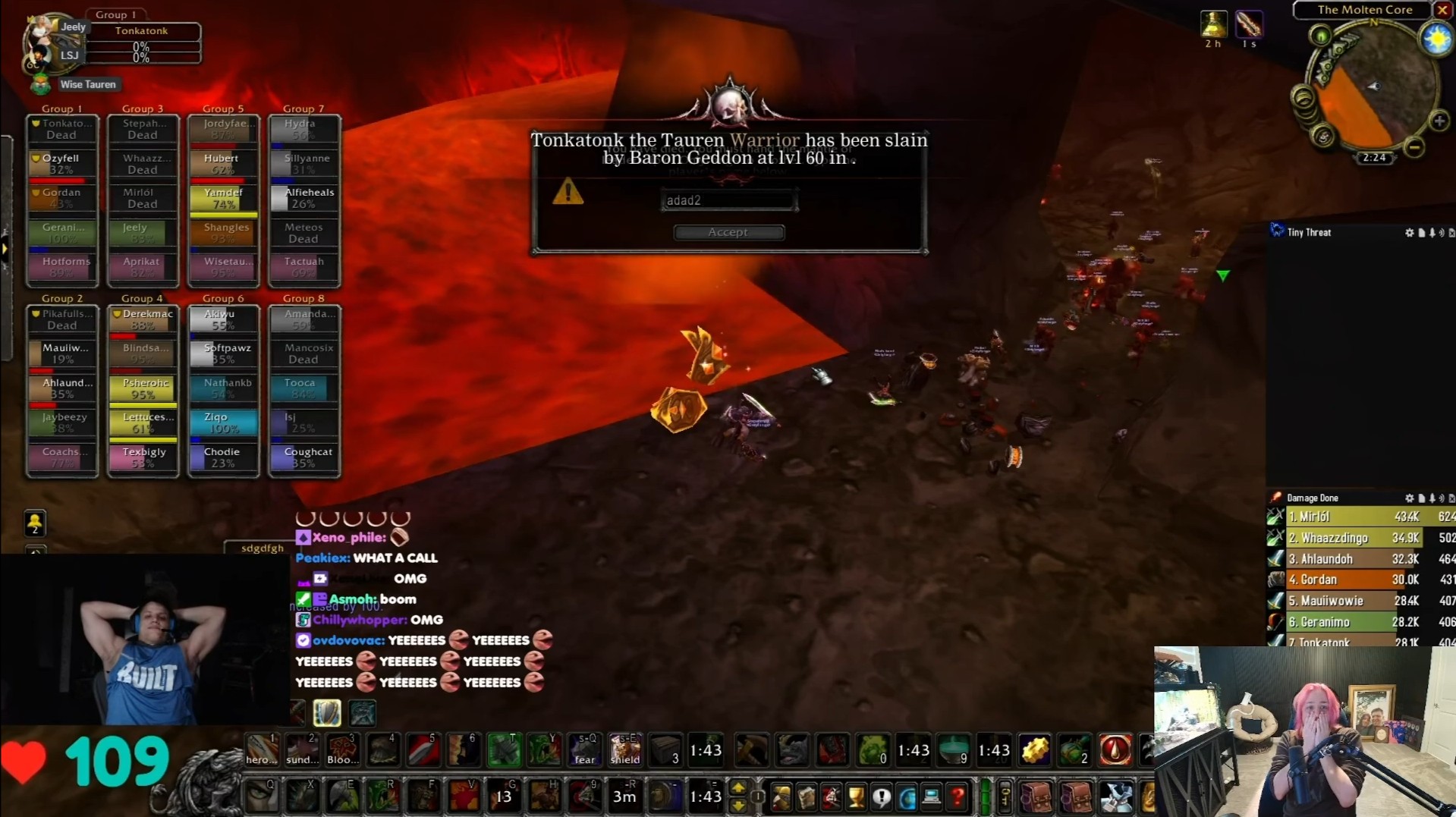
‚OnlyFangs‘ Season 2: You haven’t lived until you’ve died in WoW. Das Potenzial von Game Literacy & Re-Performance im Umgang mit historischen Spielkulturen
„Something is different here than simply remembering…“1
90% of gamers have played a remake or remaster, finds new report2
$1.4b Was Spent on Remakes and Remasters in 2024 & 20253
Analytics firm lists 18 games ripe for remake or remaster success4
Seit geraumer Zeit perfektioniert die Gamingbranche angesichts der obigen Schlagzeilen die Kommodifizierung der eigenen Vergangenheit.5 Zwar ist der eigentliche Stand der Bewahrung des Mediums alles andere als zufriedenstellend,6 doch es gibt Lichtblicke: Mehr als zehn Jahre nach einschlägigen Forschungsbeiträgen7 wird die Gamesbewahrung angesichts der zunehmenden Abhängigkeit von Online-Infrastrukturen, allen voran das Geschäftsmodell der Games as a Service (GaaS), nun auch als Verbraucherschutzanliegen verstanden.8 Doch eine Auseinandersetzung mit der Vergangenheit digitaler Spiele geht weit über Kommerz oder Bewahrung hinaus: Zwanzig Jahre seit dem Launch von Online-Services für Konsolen sowie Steam besitzen viele Spieler*innen jahrzehntealte Accounts, die die eigene Gamingbiografie und den wachsenden Backlog stets vor Augen halten.9 Gleichzeitig scheint es, zumindest am PC, eine Diskrepanz zwischen dem Auftreten einer Industrie „[...] where the best game is the next game [...]“10 und dem tatsächlichen Spiel- bzw. Kaufverhalten11 zu geben. Zusätzlich kreieren Streamer- wie YouTuber*innen Content von und mit alten Spielen, sei es als Videoessay, Let's-Play-Reihe oder Speedrun. Auch im eSports-Bereich gibt es eine Art Rückkehr zur Vergangenheit, etwa mit dem Wiederaufleben von StarCraft: Brood War (1998) bzw. nun StarCraft: Remastered (2017) in Südkorea.12
Es deutet sich ein Spektrum vergangenheitsbezogener Praktiken an, die weder einem historischen Reenactment entsprechen, noch allein mit Nostalgie oder Anemoia13 zu erklären sind. Dabei ist die Auseinandersetzung mit dem vergangenen Spiel(en) bereits eine Struktur im Spielprozess selbst: Vom Scheitern über Wiederholung bis zur Selbstoptimierung.14 Neben unterstützenden Features wie Replays15 sind dabei auch ganze Genres entstanden, die über Mechaniken wie Permadeath diese Struktur offenlegen.16 In älteren Spielkulturen wurden etwaige Konsequenzen längst beobachtet,17 allerdings selten in den Zusammenhang der Bewahrung18 gestellt.
It is one time passing on to and as another time. The past can disrupt the present [...], but so too can the present disrupt the past [...]; neither are entirely ‘over’ nor discrete, but partially and porously persist. Something is different here than simply remembering, or a simple negotiation with ‘a time gone by’.19
Analog zum obigen Zitat der Performanceforscherin Rebececca Schneider stellt sich die Frage, wie diese Formen der gegenwärtigen Auseinandersetzung mit vergangenen Spielprozessen oder alten digitalen Spielen theoretisch gefasst werden können. Dafür werden zwei Schlüsselkonzepte vorgeschlagen: Die Ideen hinter einer möglichen Game(s) Literacy des Spieleforschers José P. Zagal20 und der Begriff der Re-Performance der Performance Studies.
[W]hen the performance returns, it is altered. I contend that each return is simultaneously marked by its difference from the initial performance and haunted by the specter of that initial performance. This raises questions with regard to authorship, particularly when the re-performance is performed by another artist. Who owns/authors the work?21
Zwischen November 2024 und Herbst 2025 war eine öffentliche Game Re-Performance zu beobachten, welche zur Demonstration dieser Konzepte dienen kann: Zum zwanzigjährigen Jubiläum von World of Warcraft (2004) haben sich hunderte von Streamer*innen zusammengeschlossen,22 um auf neuen Servern für World of Warcraft Classic (2019) den sogenannten „Hardcore“-Modus zu spielen, eine Variante des Spiels mit Permadeath.23
World of Warcraft, abgekürzt WoW, ist ein Paradebeispiel für die Veränderungen, die ein digitales Spiel durch Expansionen und Patches durchleben kann. Über Grundbegriffe der Performance Studies und Theaterwissenschaft wie Text, Mise-en-scène und Performance lassen sich diese Umstände für die Bewahrung und Geschichtsschreibung strukturieren.24 Auch der Performativitätsbegriff findet Anwendung, etwa indem Spieler*innen des Privatservers Nostalrius (2015–2016) die Geschäftspolitik von Blizzard Entertainment bzgl. „Legacy serve[r]“25 von einem „You think you do, but you don't.“26 zu „I understand that for some of you, your favorite flavor is vanilla.“27 wandelten.28 Diese Hintergründe zu WoW Classic und den Performance Studies als Perspektive für die Gamesbewahrung sind Teil eines vergangenen Beitrages „Azeroth as Theatre“ (AaT), der in Kombination mit einer Masterarbeit nun „reperformed“ werden soll.29 In AaT wurden am Beispiel von WoW die Herausforderungen der Gamesbewahrung in Zeiten von GaaS ausgelotet. Dabei haben Spieler*innen eine zentrale Rolle eingenommen, die über die notwendige Bevölkerung einer alten Online-Welt und Bereitstellung von Paratexten30 oder Artefakten einer „participatory culture“31 weit hinausging.32
In der Auseinandersetzung mit Re-Performance und Game Literacy am Beispiel von <OnlyFangs> Season 2 bietet sich nun die Gelegenheit, die Bewahrungsdiskussion von einem organisatorischen „Was“ um ein spielkulturelles „Wie“ zu erweitern. Damit eröffnet sich nicht nur ein besseres Verständnis vom gewünschten Ziel der Bewahrung (langfristiger Spielbarkeit)33 sondern auch eine kritische(re) Perspektive im Umgang mit alten digitalen Spielen und ihrer (vergangenen) Spielkulturen. Insbesondere mit den anfänglich erwähnten Erzeugnissen der Industrie, zu denen auch WoW Classic gehört,34 denen in der Spielepresse, aber auch teils in der Forschung, mit „overwhelming scorn“35 begegnet wird.
(Game) Re-Performance
I argue that the term re-performance also encompasses performances that are not direct re-enactments, but which still resemble the initial performance in notable ways. The term re-performance incorporates performances which do not necessarily repeat the performative actions of the initial performance but which examine the same issues or concepts. As well as performances [...] in which artists seek to re-perform themselves.36
Das obige Zitat der Performanceforscherin Sarah Julius ist ein Ergebnis grundlegender Diskussionen über den Performancebegriff, ausgelöst durch eine verstärkte Mediatisierung unterschiedlicher Performancekünste37 und einer zunehmenden „commodity culture“38 in den 1990er Jahren.39 Diese Debatte, repräsentiert im Austausch zwischen den Performancetheoretiker*innen Peggy Phelan und Philip Auslander, stellte klassische Live-Performance über die Ko-Präsenz von Akteur- und Zuschauer*innen (Liveness) den neuartigen, mediatisierten „live“ Performances gegenüber.40 Ebenso wurde hinterfragt, inwiefern eine Performance in ihrer Gänze verstanden oder bewahrt werden kann.41 Während Phelan mit ihrer Ontologie von Performance als ephemeres Ereignis kultur- und sozialpolitische Ziele verfolgte,42 nutzte Auslander diese Darstellung für ein pragmatisches Verständnis mit Verweis auf Walter Benjamin.43 Demnach versteht er Liveness als Konsequenz der kulturhistorischen Rahmenbedingungen der menschlichen Wahrnehmung.44
In dieser Auseinandersetzung fanden Vertreter*innen der Game Studies später Anknüpfungspunkte für eine Auffassung von und vom digitalen Spielen als Performance.45 Für das gegenwärtige Anliegen stehen das Verstehen und die potenzielle Bewahrung von Performance im Vordergrund.46
Jeglicher Versuch, eine Aufführung zu reproduzieren, schlägt um in den Versuch, sie zu dokumentieren. [...] Eine solche Dokumentation schafft vielmehr erst die Bedingung der Möglichkeit, um über Aufführungen sprechen zu können. Dabei ist es gerade die reflektierte Spannung zwischen ihrer Flüchtigkeit und den unablässigen Versuchen, sie mit Video, Film, Photographie, Beschreibungen zu dokumentieren, die auf ihre Ephemeralität und Einmaligkeit unmißverständlich hinweist.47
Ohne Dokumentation oder Überreste vergangener Performance wären ganze Forschungsbereiche wie Theatergeschichte unmöglich.48 Auch Peggy Phelan, die gerne als Gegnerin von Dokumentationstechniken dargestellt wird, kommt ohne diesbezügliche Materialien in ihrer Lehre nicht aus.49 Nichtsdestotrotz wird eine Performance so in ein komplett anderes Format übersetzt, „thereby alter[ing] the event itself.“50 Ähnliche Bedenken formulierte die Theaterwissenschaftlerin Erika Fischer-Lichte zum Verständnisprozess bzgl. Performance, inklusive einer Aufführung, derer man selbst Teil war: Im Vergleich zu statischen Kunstformen können sich Akteur- und Zuschauer*innen nur schwer einen Überblick zu einer laufenden Performance verschaffen.51 Auch im Nachhinein ist man weiteren Problemen wie den Grenzen des menschlichen Gedächtnisses oder der Übersetzungsleistung bzgl. non-verbaler Impressionen ausgesetzt.52 Spieler*innen, Forscher*innen aber auch Game-Designer*innen können diese Bedenken gut nachvollziehen.53 Obwohl über den Zugang zum Spiel relativ leicht jederzeit eine neue Performance gestartet werden kann, ist damit noch nicht sichergestellt, es in seiner Gänze erfassen zu können.54
Die Schnittstellen zwischen dem Performance-Diskurs und digitalen Spielen erinnern an einen Versuch des Schauspielers und Performanceforschers Steve Dixon, einen gemeinsamen Nenner in der Liveness-Debatte zu finden: Wenn Streitpunkte wie die Eigenschaften unterschiedlicher Medientechniken oder das (Nicht-)Vorhandensein von Körperlichkeit ausgeblendet werden, lässt sich zumindest im zeitlichen Aspekt oder der „nowness“55 ein gemeinsamer Bezugspunkt finden.56 Doch die zunehmenden Wiederaufführungen vergangener Performancekunst ab den 2000er Jahren57 stellten auch diesen Punkt in Frage.
Die Diskussion wurde in eine neue Richtung gelenkt: Neben Fragen um die Autor*innenschaft oder Authentizität in Bezug auf das Original wurde befürchtet, dass die Bedeutung der ursprünglichen Performances ersetzt oder der gesamten Kunstform langfristig die Innovationskraft geraubt werden würde.58 Doch die vom Theater geprägte Seite des Forschungsfeldes erinnert daran, wie Performance stets auf Vergangenem aufbaut.59 Oder plakativ ausgedrückt: „Every performance is already a Re-Performance, and the Ur-version no more than a fantasy.“60
Diana Taylor geht hierbei einen Schritt weiter, indem sie Performance als Übertragung von „embodied practice/knowledge“61 versteht. Analog zum Wunsch nach langfristiger Spielbarkeit bietet sich mit Re-Performance62 die Möglichkeit, Probleme in der Bewahrung eines performativen Mediums63 durch Praxis zu überwinden. Dabei greifen die bereits zitierten Kolleg*innen Rebecca Schneider und Sarah Julius die obigen Bedenken auf und verstehen sie nicht als Hindernisse, sondern Potenziale:64
I assert that through re-performance the initial performance is adapted, not just by and for the new body which is performing the work, but also in order to shed new light onto the initial performance. Thus, re-performance adapts performance for a new cultural, social and political context, allowing it to be presented to a new generation of audience members. Through this process, the initial performance is transformed and adapted, but not beyond recognition. The re-performance (or adaptation) is haunted by the specter of the initial performance.65
Unterschiede zur ursprünglichen Performance sollten nicht als Bug, sondern Feature aufgefasst werden.66 Julius ist nicht die Einzige, welche die Spuren oder Nachwirkungen vergangener Performance mit gespenstischen Metaphern beschreibt. So verwenden Marvin Carlson und Herbert Blau den Begriff „ghosting“,67 um die im Theater übliche Wiederverwendung von Produktionsmaterialien, Texten, Akteur*innen etc. bis hin zur Übernahme von Inhalten anderer Kunstformen zu beschreiben.68 Dies trifft auch auf digitale Spiele zu.69 Inwiefern Rezipient*innen bzw. Spieler*innen Geister vergangener Performance erkennen können, ist ein komplexes Zusammenspiel aus Kontext, Erinnerungen, Erwartungen und eine (Nicht-)Zugehörigkeit zu Interpretationsgemeinschaften.70 Diese Umstände sind auch für die Entwicklung von Spiel-Re-Performances relevant, so Square Enix Produzent Yoshinori Kitase:
The biggest reason though, is how much time has passed and how technology and the world has changed since the original was released. Modern players may have seen the characters Cloud and Sephiroth [...], but they may not have played the game where the characters originated from.
[...] [I]f the original game was the only way to experience it, new players - especially anyone that wasn’t playing games in the original’s era - probably wouldn’t be so impressed with the original game compared to the latest titles they could be playing. So that felt like an exciting challenge [...] - let’s take everything great from the original, and create something new and surprising [...].71
Tatsächlich wird in Final Fantasy VII Remake (2020) der Schatten des Originals zum Teil der Handlung, indem Geister-NPCs die Charaktere verfolgen und ggfs. direkt eingreifen: „[...] whenever events stray too far from fate's intended path [...].“72 Nach Spieleforscher Logan Brown wenden Final Fantasy VII Remake und andere Re-Releases/Remaster/Remakes unterschiedliche Strategien an, um Bezüge zum Original herzustellen, aber auch alte Elemente in den modernen Spielemarkt zu rekontextualisieren.73 In seinem Plädoyer für einen unvoreingenommenen Umgang mit diesen Spielen geht er ähnlich zum obigen Re-Performance Diskurs vor,74 allerdings auf einer anderen theoretischen Basis und mit Fokus auf die Spielentwicklung.75
Für das Fallbeispiel wird sich weiter an Re-Performance orientiert, da „[...] artists seek to re-perform themselves“76 schließlich auch Spieler*innen betrifft.77 Doch um über die möglichen „Geister“ in Game Re-Performances wie OnlyFangs sprechen zu können, werden noch zwei Dinge benötigt: Ein Orientierungsrahmen ähnlich der Ghosting-Ideen für digitale Spiele und ein Exkurs zu den Wurzeln von GaaS.
Game(s) Literacy
Viele Fragestellungen der Spieleforschung kommen nicht ohne eine direkte Auseinandersetzung mit dem Forschungsobjekt bzw. einer performativen Forschungspraxis aus78 und das obwohl dabei eine „nüchterne Distanz“79 teils aufgegeben wird. Diese und weitere Parallelen zum Umgang mit Performance80 betreffen auch die Lehre: Vor etwa zwanzig Jahren haben José P. Zagal und Amy Bruckman ähnliche Schwierigkeiten im Umgang mit Studierenden beschrieben.81 Inspiriert von James Paul Gee’s What Video Games Have to Teach Us About Learning and Literacy (2003) formulierte Zagal das Konzept einer möglichen Game oder Games Literacy:82
[G]ames literacy can be defined as:
- Having the ability to play games.
- Having the ability to understand meanings with respect to games
- Having the ability to make games.
[...] [E]ach part of games literacy is related to, influences, and is influenced by the others. These interrelationships can be complicated, especially when we consider additional literacies.83
Im ersten Element geht es nicht darum, auf einem besonders guten Niveau spielen zu können. Vielmehr ist das Meistern üblicher Zugangsprobleme im digitalen Spielen gemeint, etwa mit der Steuerung, die erfahrene Spieler*innen gerne verdrängen.84 Letzteres ist auch in der Art und Weise begründet, wie Lernprozesse im Game Design versteckt werden können.85 Dennoch erfordern bestimmte Spiele oder Mechaniken externe Kompetenzen.86 Dies betrifft auch den zweiten Aspekt: Die Fähigkeit, Bedeutungen aus digitalen Spielen im Rahmen unterschiedlicher Kontexte zu ziehen.87 Der letzte Aspekt, das Game Making, in Referenz zu einem Beitrag von Katie Salen,88 unterstützt dagegen die ersten beiden Elemente von Game Literacy über aktive Game Design Praxis.89
Wenn Game Literacy in Bezug auf Re-Performance weitergedacht wird, eröffnen sich Überschneidungen zu Erkenntnisprozessen, die zuvor bzgl. Ghosting besprochen wurden.90 Im Gegensatz zu Carlson bevorzugt Zagal jedoch die „communities of practice“ von Jean Lave und Etienne Wenger gegenüber den Interpretationsgemeinschaften von Stanley Fish.91 Der daraus resultierende kollektive Wissensschatz von Spieler*innen ist so nicht nur eine Sammlung interessanter Paratexte,92 sondern praktisch eine Weitergabe von „embodied [...] knowledge.“93 Anders gesagt: „[...] [E]very time I play a game, I am in conversation with everyone else who has played before me.“94 Dieser kollektive Wissensschatz kann in Kombination mit den eingangs erwähnten Optimierungsprozessen für Game Designer*innen langfristig zum Problem werden.95 Allerdings, so James Newman, sind Spieler*innen über sogenannte „superplay“96 Praktiken durchaus in der Lage, neue Herausforderungen bzw. Spielweisen zu schaffen:97
What these superplay practices ably demonstrate is the malleability and plasticity of the videogame and the transformativity of gameplay. [...] The videogame is material which is given shape, form and meaning through the performance of the gamer. [...] What is particularly interesting about this situation is that there is no necessary reason why this performance has to be so clearly bounded by the ludic framework of the game.98
Superplay kann als Schnittstelle zwischen Optimierungsprozessen im digitalen Spielen und dessen performatives Potenzial aufgefasst werden.99 Oder: Game Making lässt sich auch abseits einer Entwicklungsumgebung umsetzen, indem das Spiel selbst zum Material wird.
Wenn der Umgang mit (alten) digitalen Spielen derart von (nicht vorhandenen) Vorerfahrungen und einer (Nicht-)Zugehörigkeit zu relevanten Spielkulturen geprägt ist, wird die Bewahrung vergangener Game(s) Literacy ebenso wichtig wie die Erhaltung „des“ Spiels. Der Segen und Fluch eines performativen Mediums, der auch Forschungsliteratur betrifft:
Simply put, students who are not familiar with World of Warcraft will not fully understand more than a quarter of the articles in the field’s two leading journals. The more students know World of Warcraft, the better they will be able to critically engage with the arguments put forth in articles citing that game, and the same is true for Tetris, Grand Theft Auto, and other highly cited „canonical“ games.100 As the years pass, the expectation that students, whatever their background, are familiar with older games also becomes less tenable [...].101
Wie in AaT demonstriert wurde,102 lassen sich Entwicklungsprozesse in der Game Literacy älterer aber prominenter Spielkulturen103 mit aktiven Re-Performances gut nachverfolgen. Doch was ist mit Spielen, die schon seit Jahrzehnten aus dem Erfahrungshorizont gegenwärtiger Spieler*innen gefallen sind?
Exkurs: Vom Parser zum Parsing
Um im Anschluss das Potenzial von (öffentlicher) Game Re-Performance für die Bewahrung wie Geschichtsschreibung digitaler Spiele und ihrer Spielkulturen zu zeigen, ist ein Blick auf die Wurzeln von MMORPGs (und GaaS im Allgemeinen)104 nötig: Multi-User-Dungeons, kurz MUDs, die ab den späten 1970er bis 1990er Jahren primär als nicht-kommerzielle Onlinespiele von Studierenden an Universitäten gehostet wurden.105 Durch Weitergabe von Codebases und Experimenten mit unterschiedlichen (oder eigens kreierten) Programmiersprachen entstanden so unterschiedliche Formen.106 Damit entwickelten sie sich zu einer frühen Spielwiese für erste (Online-)Spieleforschungen und Untersuchungen von Performance im digitalen Raum.107 Doch seit der Ablösung durch grafische MUDs bzw. MMORPGs108 ab den 1990er Jahren109 pflegt das Genre ein Nischendasein.110
Die folgenden Beobachtungen beziehen sich auf Re-Performances der ersten Beispiele des Genres:111 MUD1 (1978) und MUD2 (1985), die ursprünglich von Roy Trubshaw und Richard Bartle an der University of Essex kreiert und administriert wurden.112 Dabei ließen sich mangels einer aktiven Playerbase113 nicht alle Aspekte untersuchen. Nichtsdestotrotz verblieben mithilfe des Orientierungsrahmens der Game Literacy einige Elemente vergangenen Spielens, die später im Bezug auf WoW Classic Hardcore und OnlyFangs noch eine Rolle spielen werden.
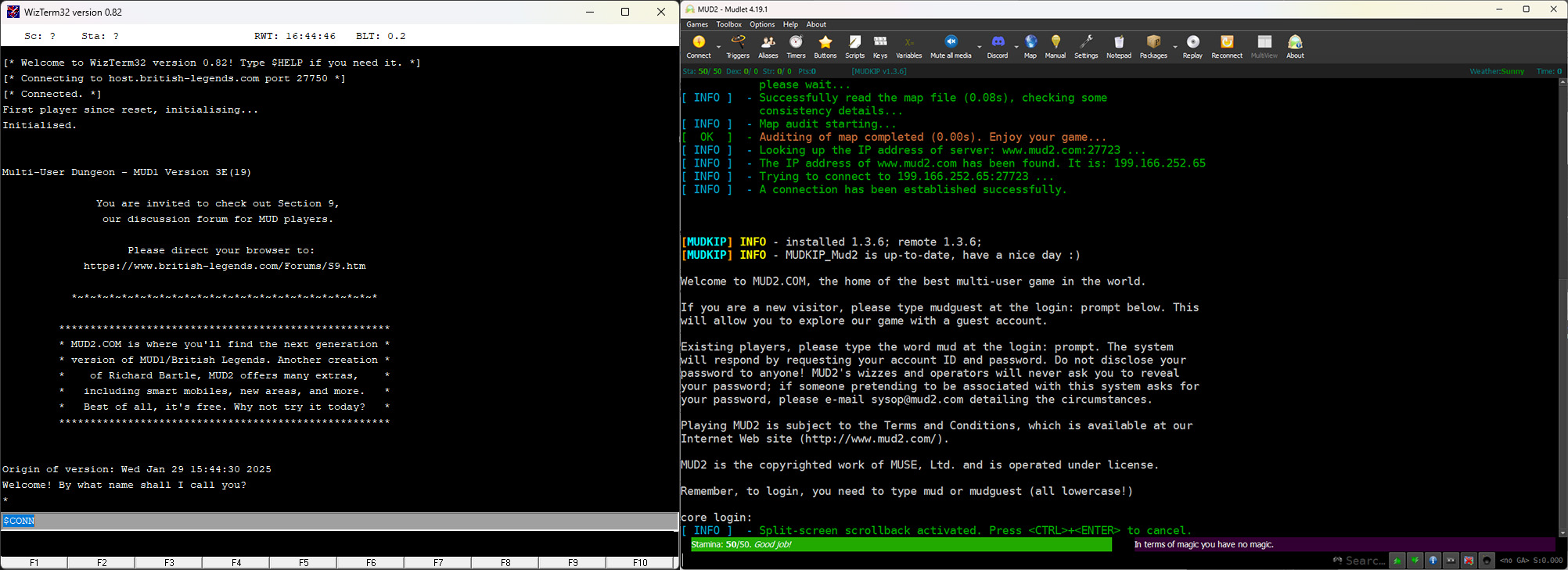
Abb. 1: Die MUD-Clienten ‚WizTerm‘ (links) und ‚Mudlet‘ (rechts)
Der offensichtlichste Unterschied zu modernen Spielen ist anhand der obigen Beispiele die Textbasiertheit. Sie erfordert mit Blick auf die Steuerung bzw. den Umgang mit dem Parser114 ein Verständnis für klassische Textadventures oder die Bedienung von Computern via Command-Line User Interfaces, also Kommando- oder Befehlszeilen.115 Aus einer von audiovisuellen Spielen und MMORPGs geprägten Perspektive scheint sich damit das Geschehen auf das heute typische Combat Log116 zu reduzieren. Informationen zu grundlegenden Spielregeln (z. B. Schadensberechnungen), die oftmals im Chatprotokoll landen oder direkt ausgeblendet werden, werden so (vermeintlich) in den Vordergrund gestellt.
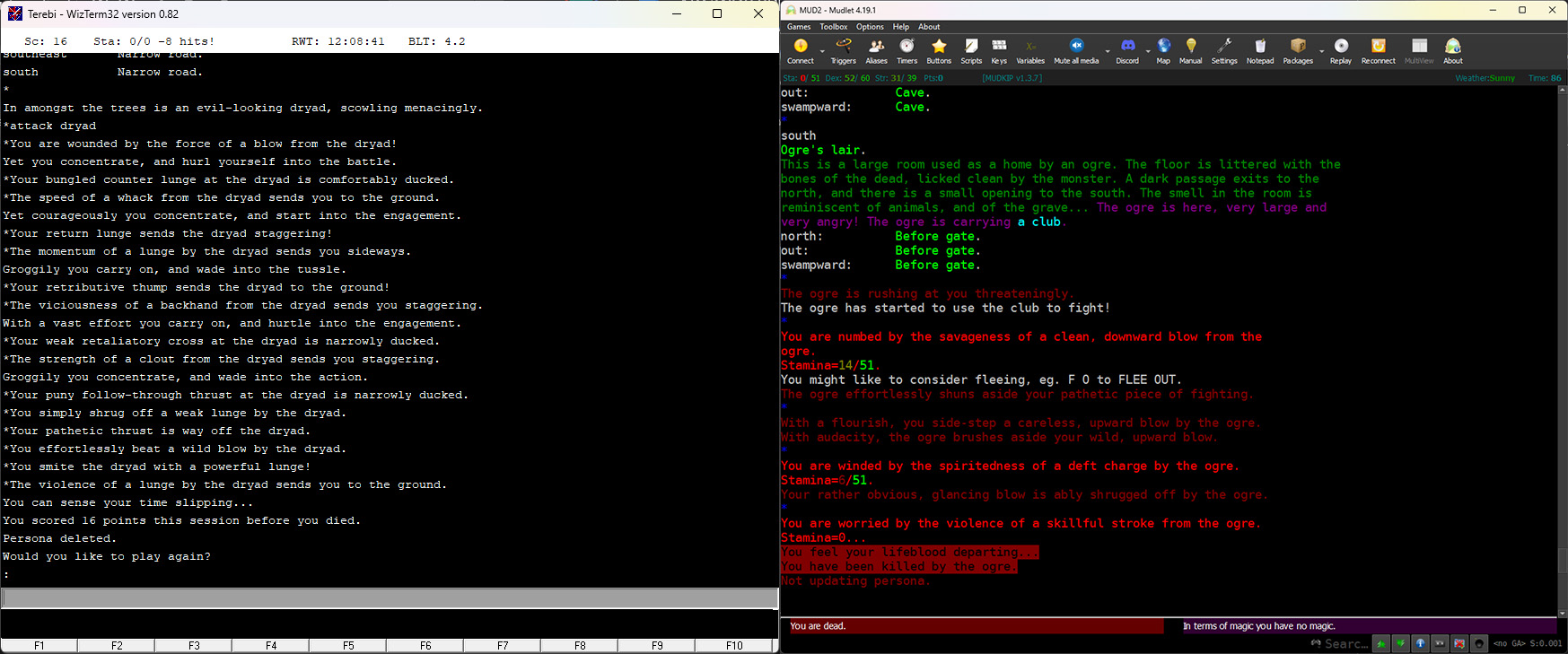
Abb. 2: Kämpfe in ‚MUD1‘ (links) & ‚MUD2‘ (rechts)
In Anlehnung an die von Textadventures inspirierten MUD werden Kämpfe wie in den obigen Screenshots erst im Nachfolger MUD2 (rudimentär) quantifiziert.117 Wie ebenfalls aus den Logs hervorgeht, arbeiten beide Spiele mit Permadeath. Doch Kämpfe sind nicht der einzige Weg, Erfahrungspunkte zu generieren: Vielmehr stehen das Lösen von Rätseln und das Finden von Schätzen im Vordergrund.118 Auf Maximallevel haben Spieler*innen dann die Möglichkeit zum „wizard“ oder zur „witch“ aufzusteigen, um so der Administration bzw. „god“119 des MUDs zu assistieren, etwa als Programmier*in, Designer*in oder Community Manager*in.120 Außerhalb eines kommerziellen Rahmens und mangels Automatisierung grundlegender Serverfunktionen,121 musste Game Making zum Spielziel erklärt werden. Entsprechend sind viele Entwickler*innen früher grafischer MUDs bzw. MMOs ehemalige MUD-User, die sich an alten MUD-Designs orientierten.122 Mit einer Ausnahme: Permadeath oder generelle Sanktionen für das Sterben des eigenen Avatars wurden abgelehnt oder mit der Zeit aufgeweicht.123 Demnach lässt sich etwa eine Entwicklungslinie zwischen DikuMUD (1990), EverQuest (1999) und WoW aufzeichnen.124
Mit der audiovisuellen Darstellungsweise folgte eine Beschränkung der Game Making Möglichkeiten für Spieler*innen,125 die nicht nur mit einer stärkeren Kommerzialisierung,126 sondern auch mit technischen Umständen verbunden war.127 Im Fall von WoW verblieb eine Ausnahme: Interface-Modifikationen.128 Dieser Aspekt war in den Augen ehemaliger MUD-Spieler- sowie Forscher*innen wie Ragnhild Tronstadt und T. L. Taylor129 tatsächlich bemerkenswerter als der Sprung zur Audiovisualität:
In a contemporary game such as World of Warcraft [...] players hardly even see the representative, visual level of the game during play, as numbers and meters depicting the stats of themselves and their companions fills up their screens. [...] Naturally, to play the game successfully, immediate access to the current gamestate is preferable, even if it prevents one from being able to immerse oneself in the visual surroundings of the game-world.130
This is a story then not simply of how forms of control and normalization emerge within player culture (that we have seen before in many other games) but the complex role our technical artifacts can have in the construction of such. Things like user-produced mods are sociotechnical actors and are always involved in reshaping the game space—and indeed what play is—in powerful ways.131
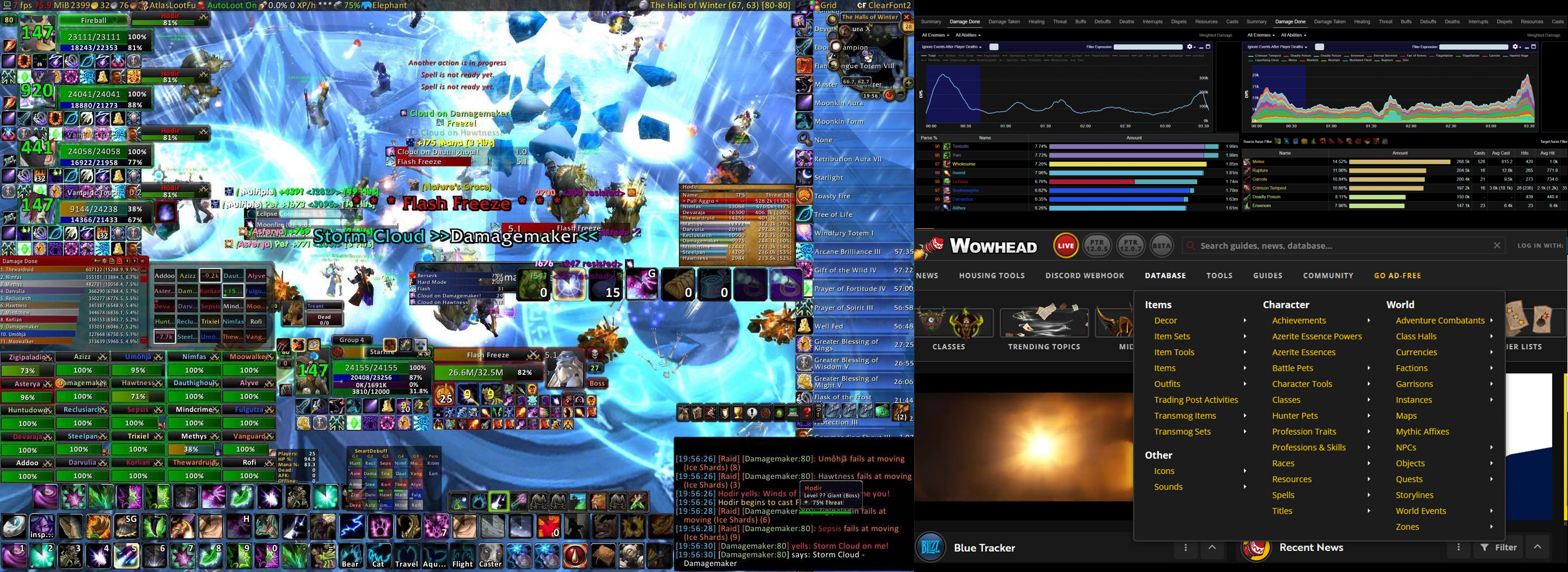
Abb. 3: Ein User-Interface in ‚WoW: Wrath of the Lich King‘ (2008), Suchfunktionen der Datenbank Wowhead & Kampflog-Analyse via Warcraft Logs
Im Vergleich zu MUD-Communities, die einen „Hilfe zur Selbsthilfe“132 Ansatz pflegen, werden für MMOs diverse Anlaufstellen mit Informationen zum Spiel angeboten.133 Die von Tronstadt als auch Taylor erwähnten Beispiele für WoW finden in den obigen Screenshots sowohl innerhalb als auch außerhalb des Spiels Anwendung. Tatsächlich bauen diese Hilfsmittel zum Teil auch auf den Wissensstrukturen älterer Spiele auf.134
Mit der Entwicklung von MUD-Clients in den 1990er Jahren135 konnten User erstmals ihren Spielverlauf über Text-Logs dokumentieren.136 In vielen MMOs137 wurde die Praxis dann auf das Combat Log übertragen und zum „theorycrafting“138 genutzt.139 Aus dem Umgang mit dem Text-Parser als Pseudo-Dungeonmaster140 wurde ein gegenseitiger Vergleich über Kampfloganalyse bzw. „parsing.“141
WoW DOES change everything:142 Classic Hardcore als Schnittstelle für Superplay & Game Making
In a virtual world with no [permanent death], you only get to experience a body of content once. After you’ve consumed it, you rise in power such that the old content is no longer a challenge, so you go on to the next content.143
The only solution not involving [permanent death] is to create new content, which is (as ever) expensive.144
Während in der aktuellen Version von WoW die spielkulturellen Optimierungsprozesse von Entwickler*innenseite eingedämmt werden,145 haben Spieler*innen der Classic Re-Performance mit einer Interface-Modifikation selbst eine neue Herausforderung über Permadeath kreiert.146 Wenig später wurde der Hardcore-Modus über offizielle Server unterstützt:147
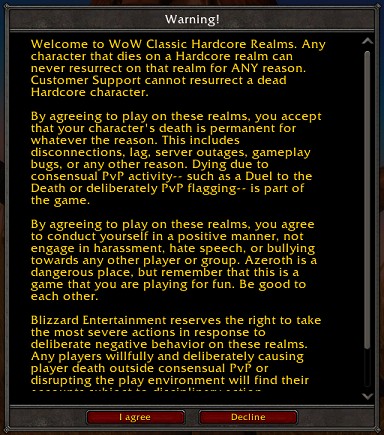
Abb. 4: Einverständniserklärung in der ‚WoW Classic Hardcore‘ Charaktererstellung
Auf den ersten Blick ist WoW Classic Hardcore ein Beispiel für Game-Making-Praktiken als Resultat von Superplay. Aus einer klassischen Bewahrungsperspektive betrachtet ist der Modus damit noch weniger ein Reenactmentversuch von Vanilla als der ursprüngliche Launch von WoW Classic.148 Bereits die Charaktererstellung (Abb. 4) ist anders, indem Spieler*innen eine Einverständniserklärung für den Permadeath akzeptieren müssen.
Doch über den Blickwinkel der Re-Performance und Game Literacy haben wir dennoch eine Demonstration diverser „Geister“ vergangenen Spielens auf mehreren Ebenen vorliegen.
Many say the original Vanilla experience of 2004 through 2006 can't be rekindled, and they're right; memories burn brighter in the mind. But with Classic Hardcore, people are forced to go back to the game's roots to survive the arduous journey to level 60 in WoW Classic with only a single life to live. While this may only resurrect a part of the game's originality, it's still enough to rekindle a bit of what once was. Classic Hardcore is everyone's last chance to get a glimpse of what Vanilla really was, so fans should enjoy it while it lasts.149
Auf Spielebene sorgt die stetige Todesgefahr für eine vorsichtige und kooperative Herangehensweise, die viele Spieler*innen an den ursprünglichen Launch erinnert150 und selbst über den Reenactment-Versuch von Nostalrius nicht wiederhergestellt werden konnte.151 Wenn es brenzlig wird, werden Spieler*innen im Überlebenskampf152 so in emergente Spielsituationen153 forciert, die normalerweise mit einem Schulterzucken und kurzen Corpse run154 oder Wiederbelebungszauber enden würden. Damit wurde auch ein Fokus zurück auf die Leveling-Phase im MMORPG gelegt, die heute oft als lästige Pflicht empfunden wird.155
Auf einer spielkulturellen Ebene begegnen wir einer Lösung für ein gelöstes Spiel156 ohne neuen Content157 genau in der Spielmechanik wieder, die im Wechsel von textbasierten MUDs hin zu audiovisuellen MMOs größtenteils verloren ging.158 Dass WoW für Permadeath nicht designed wurde, war nach Jahrzehnten diverser Optimierungsstrategien, die auch in der Spieleforschung begleitet wurden,159 nicht mehr von Belang. Somit haben Hardcore-Spieler*innen unbewusst nicht nur Teile der alten Vanilla-Spielweise, sondern auch eine Schnittstelle zwischen Game Making sowie Superplay reperformed, die sich bis zu den Wurzeln des Genres zurückverfolgen lässt. Kurz: „It is one time passing on to and as another time.“160
Damit sind wir allerdings noch nicht ganz am Ende dieser Game Re-Performance angekommen. Denn abgesehen von der Wiederkehr vergangener Spielweisen und Mechaniken ist da noch „[...] the allure of potentially running into your favorite streamer.“161
<OnlyFangs> Season 2: Game Re-Performance als öffentliches Ereignis
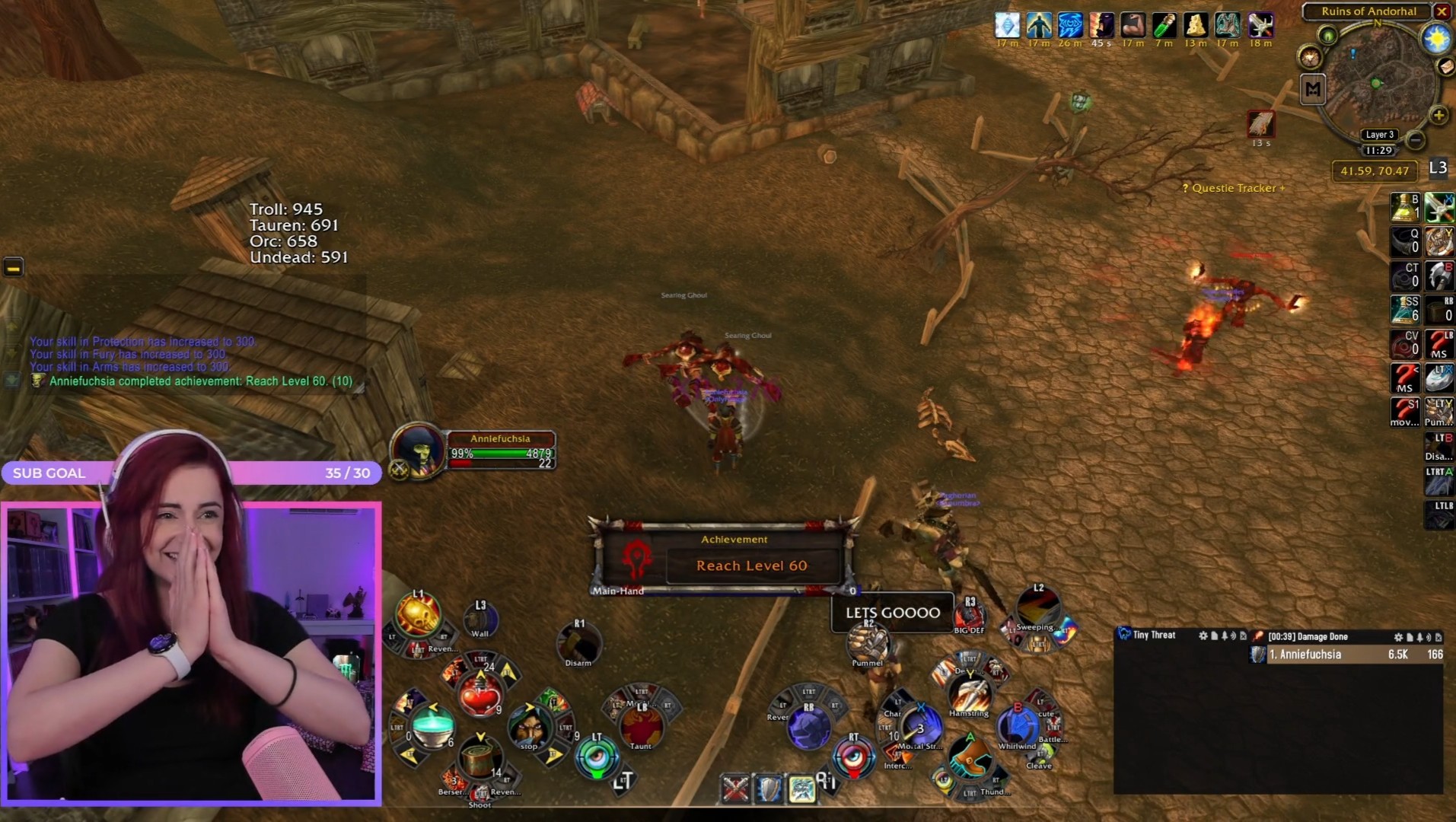
Abb. 5: Streamerin AnnieFuchsia, die ‚WoW Classic Hardcore‘ als zusätzliche Herausforderung per Controller spielt, erreicht Level 60
Neue Potenziale für emergente Spielsituationen haben nicht nur dafür gesorgt, dass Spieler*innen fleißig Clips wie den obigen miteinander teilten,162 sondern boten auch eine gute Kulisse für Livestreaming. Dem fügte <OnlyFangs>, als eine komplett aus Streamer*innen bestehende Gilde,163 weitere Dimensionen hinzu, die auch für die allgemeine Forschung zu Spiele-Livestreams sowie Livestreaming als Performance interessant sind.164 Damit verbunden waren etwa der organisatorische Aufwand, angefangen mit dem Regelwerk bis hin zu Treffen im echten Leben,165 soziale Konflikte166 und spontanes Role-Playing.167
Für die Bewahrungsperspektive bedeutet Livestreaming nicht nur temporäre Aufmerksamkeit für ein älteres Spiel bzw. dessen Re-Performance:168 Auf einer spielkulturellen Metaebene haben wir es mit einer öffentliche Demonstration und Diskussion von (vergangener) Game Literacy zu tun. Dabei ist eine Streamingsituation als Performance natürlich nicht exakt mit einem normalen Spielprozess vergleichbar, beginnend mit der semi-öffentlichen Situation (vgl. Abb. 6) auf dem von <OnlyFangs> ausgewählten Server.169
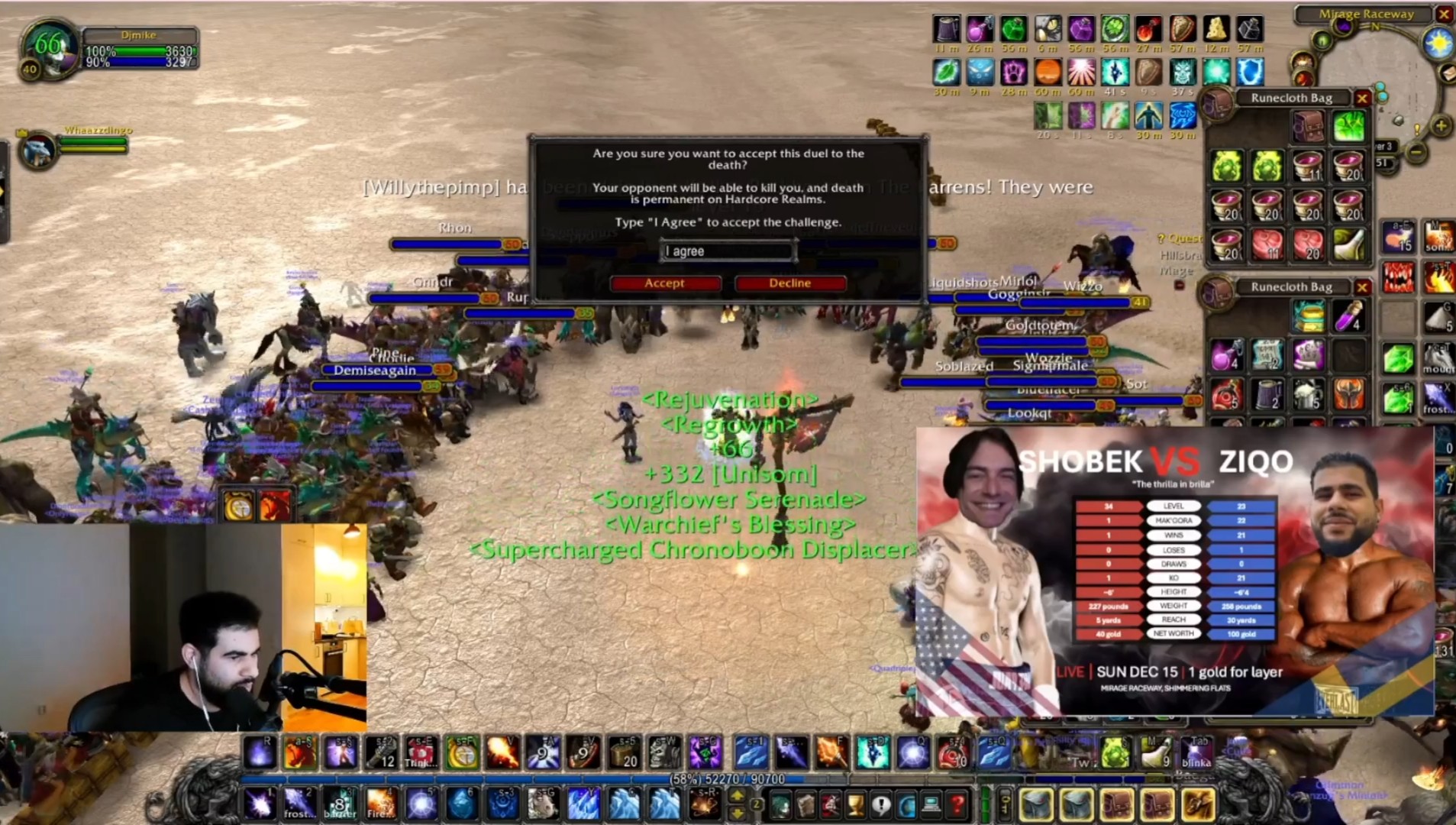
Abb. 6: Die Streamer Ziqo und Shobek duellieren sich bis zum Tod in Anwesenheit normaler Spieler*innen
Nichtsdestotrotz motivierte die Aussicht auf Maximallevel an Endgame-Raids teilnehmen zu können, diverse Persönlichkeiten mit unterschiedlichem Alter, unterschiedlicher Herkunft und verschiedenen Gamingbiografien, über mehrere Monate das gleiche Spiel miteinander zu spielen.170 Dabei wurden für Unterhaltungszwecke auch bewusst unerfahrene Spieler*innen in ungewohnten Situationen oder Rollen eingesetzt.171 Während Veteran*innen ihre vergangene Spielweise reperformten, erlebten Neulinge klassische Spielmomente zum allerersten Mal – die im Anschluss zusammengeschnitten, geteilt und kommentiert wurden.172 Zwar wurden sie von erfahrenen Mitspieler*innen und heutigen Informationsquellen unterstützt, doch im Hardcore Modus kann ein kleiner Fehler jederzeit zum Verhängnis werden.173 Damit ist „backseat gaming“174 im Livechat und auf Social Media vorprogrammiert.175
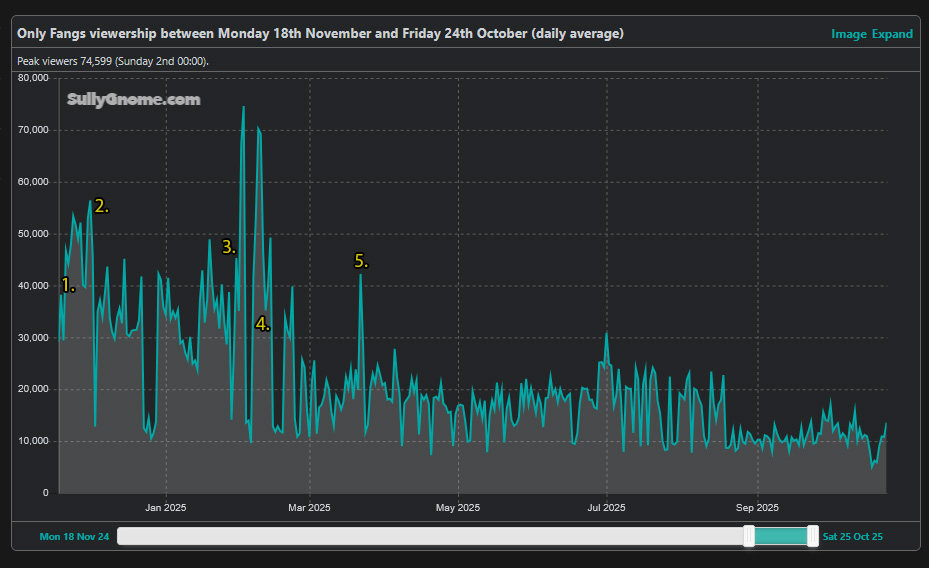
Abb. 7: Die durchschnittliche Einschaltquote aller OnlyFangs-Streamer*innen im Twitch-Analysetool ‚SullyGnome‘
Neben dem Launch (Abb. 7, 1) und IRL-Gildentreffen (2) erreichte <OnlyFangs> die größte Aufmerksamkeit während der ersten Endgame-Raids (3), beim Tod von Tyler1 (4),176 einer der beliebtesten teilnehmenden Streamer, und während einer DDoS-Attacke (5)177 auf die WoW-Server.
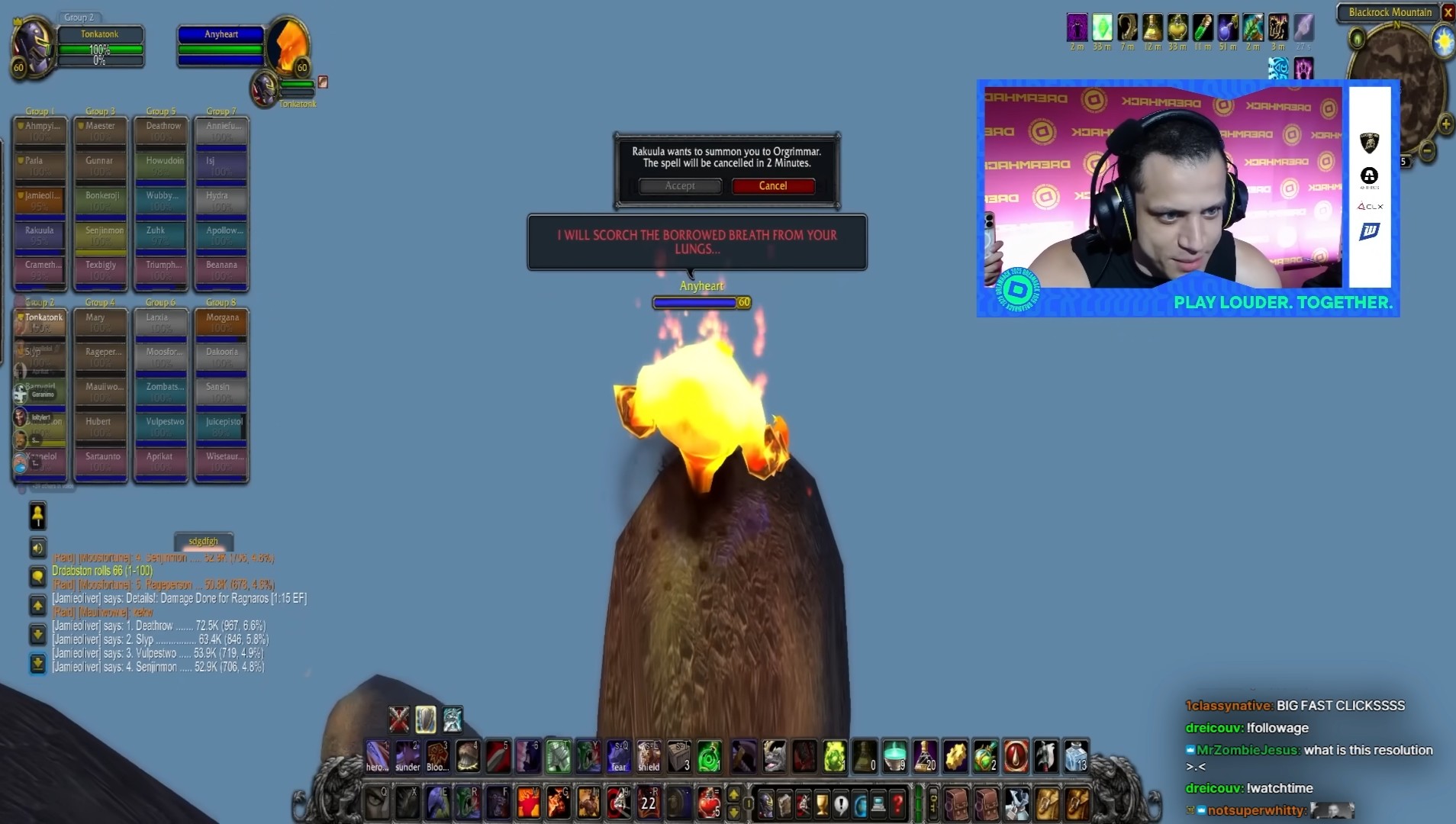
Abb. 8: Tyler1, kurzzeitig für ein Raid-Event wiederbelebt, wird von Game Master Anyheart auf dem Gipfel des Blackrock Mountain teleportiert und im Anschluss (wieder) getötet
Trotz eines Eingriffs von Blizzard Entertainment,178 der bei Serverproblemen für normale Spieler*innen ausbleibt,179 verlor das Event langfristig an Einschaltquoten. Wenn man einen bestimmten Punkt von <OnlyFangs> Season 2 als Ende nehmen möchte, der thematisch auch zum MUD-Exkurs passt, dann vielleicht die kurzzeitige Wiederbelebung von Tyler1 (Abb. 8) durch den Entwickler für ein letztes Raid-Event,180 mit seinem anschließenden zweiten Tod durch einen Game Master.181 You haven't lived until you've died in WoW182 – twice.
Gaming as Memory Machine183
Was verbleibt, sind Clips und Videos von über 100 Streamer*innen,184 verteilt auf mehreren Plattformen und gelegentlich zusammengeschnitten von Video-Essayist*innen,185 sowie Inspirationen für Re-Performances in anderen Spielen186 oder Sprachen.187 <OnlyFangs> endet damit nicht nur als Archivmaterial188 für digitale Spiele, sondern auch als das digitale Spielen mit Performance: Aus der Bewahrungsperspektive, inspiriert vom Re-Performance-Diskurs und orientiert an Game Literacy, eröffneten sich auf mehreren Ebenen – des Spiels, dessen Spielkultur und einer spielkulturellen Metaebene – die Spuren vergangenen Spielens ohne die Absicht einer historischen Aufführungspraxis.189 Das Twitch-Event und der Hardcore-Spielmodus erzählen, wenn auch unbeabsichtigt, die Geschichte über unseren Umgang mit digitalen Spielen aus der Perspektive der WoW-, MMORPG- sowie MUD-Spielkulturen.
Im Spiel mit Multi-User-Dungeons und in der Beobachtung spielkultureller Praktiken der mittlerweile zwanzig Jahre alten WoW-Spielkultur erfahren wir aber auch etwas über die Spieleforschung als Wissenschaft: Forschungsliteratur wie Lehre können nur Momentaufnahmen individueller oder kollektiver Game Literacy abbilden. Doch damit werden sie zu ebenso wichtigen Quellen wie die Überreste vergangener Game (Re-)Performance.
Medienverzeichnis
Spiele
Blizzard Entertainment: StarCraft: Brood War (Microsoft Windows, Mac OS, Nintendo 64). USA: Blizzard Entertainment 1998.
Blizzard Entertainment: StarCraft: Remastered (Microsoft Windows, Mac OS). o. O.: Blizzard Entertainment 2017.
Blizzard Entertainment: World of Warcraft. (Microsoft Windows, macOS). USA: Vivendi Games 2004.
Blizzard Entertainment: World of Warcraft Classic. (Microsoft Windows, macOS). o. O.: Blizzard Entertainment 2019.
Square Enix: Final Fantasy VII: Remake (PlayStation 4, PlayStation 5, Microsoft Windows, Nintendo Switch 2, Xbox Series X/S). o. O.: Square Enix 2020.
Roy Trubshaw; Richard Bartle: Multi-User Dungeon/MUD (PDP-10 Mainframe). UK: University of Essex 1978. Reperformed via Multi-User Dungeon - British Legends. Canada: Viktor Toth 1999. <https://www.british-legends.com/CMS/> [10.02.2026]
MUSE: Multi-User Dungeon 2/MUD2 (Mainframe, Minicomputer). UK: British Telecom 1985. Reperformed via Multi User Dungeon 2 (MUD2.COM/MUD2.ORG). Canada: Viktor Toth 1997. <https://www.mud2.com/CMS/> [10.02.2026]
William Crowther; Don Woods: Colossal Cave Adventure (PDP-10 Mainframe). USA: BBN 1976/1977. <https://www.mobygames.com/game/30153/adventure/> [10.02.2026]
Infocom: Zork (PDP-10, PDP-11, PC u. v. m.). USA: MIT/Personal Software/Infocom 1977. <https://www.mobygames.com/game/30162/zork/> [10.02.2026]
Blizzard Entertainment: World of WarCraft: Wrath of the Lich King. (Microsoft Windows, macOS). o. O.: Blizzard Entertainment 2008.
Texte
Aarseth, Espen: Cybertext. Perspectives on Ergodic Literature. London: John Hopkins University Press 1997.
Abreu, Alex: World of Warcraft's OnlyFangs Drama Highlights Difference Between High Profile And The Regular MMO Population. In: mmorpg. 28.04.2025. <https://www.mmorpg.com/editorials/world-of-warcrafts-onlyfangs-drama-highlights-difference-between-high-profile-and-the-regular-mmo-population-2000134793> [18.04.2026]
AfreecaTV StarCraft League Remastered (ASL). o. J. In: Liquipedia StarCraft. <https://liquipedia.net/starcraft/ASL> [10.02.2026]
Alston, Harry: Why Are So Many People Playing Old School Runescape? In: The Gamer. 27.07.2025. <https://www.thegamer.com/old-school-runescape-player-numbers/> [18.04.2026]
Andersen, Erik u. a.: The Impact of Tutorials on Games of Varying Complexity. In: CHI '12: Proceedings of the SIGCHI Conference on Human Factors in Computing Systems. Austin 2012. <https://doi.org/10.1145/2207676.2207687> [01.03.2026]
AKP-materials: MUD1-Logs. <https://github.com/AKP-materials/MUD1-Logs/blob/main/BL241029.log_lines.log> [12.03.2026]
AKP-materials: MUD2-Logs. <https://github.com/AKP-materials/MUD2-Logs/blob/main/2024-11-27%2314-03-18-edited.txt_lines.txt> [12.03.2026]
Archimtiros: Reflecting on a Decade of Warcraft Logs. In: Wowhead. 06.03.2023. <https://www.wowhead.com/news/reflecting-on-a-decade-of-warcraft-logs-331676> [12.03.2026]
Auslander, Philip: Liveness. Performance in a Mediatized Culture. 3. Aufl. London: Routledge 2023.
Auslander, Philip: Reactivations. Essays on Performance and its Documentation. Ann Arbor: University of Michigan Press 2018.
Aycock, John; Ganesh, Shankar; Biittner, Katie; Newell, Paul; Therrien, Carl: The Sincerest Form of Flattery: Large-Scale Analysis of Code Re-Use in Atari 2600 Games. In: FDG '22: Proceedings of the 17th International Conference on the Foundations of Digital Games. Athen 2022. <https://dl.acm.org/doi/10.1145/3555858.3555948>
Bartle, Richard. Designing Virtual Worlds. Indianapolis: New Riders 2003.
Bartle, Richard: From MUDs to MMORPGs: The History of Virtual Worlds. In: Hunsinger, Jeremy; Klastrup, Lisbeth; Allen, Matthew (Hg.): International Handbook of Internet Research. London: Springer 2010. <https://mud.co.uk/richard/International%20Handbook%20of%20Internet%20Research.pdf> [12.03.2026]
Bartle, Richard: Mud, Mud, Glorious Mud… o. J. <https://mud.co.uk/richard/masep84.htm> [18.04.2026]
Bartle, Richard: HEARTS, CLUBS, DIAMONDS, SPADES: PLAYERS WHO SUIT MUDS. In: Journal of MUD Research, Jg. 1996, H. 1. <https://mud.co.uk/richard/hcds.htm> [12.03.2026]
Bartle, Richard: Incarnations of MUD. o. J. <https://mud.co.uk/richard/incarns.htm> [12.03.2026]
Becker, Barbara: Selbst-Inszenierung im Netz. In: Krämer, Sybille (Hg.): Performativität und Medialität. München: Fink 2004, S. 413–430.
Beil, Benjamin: Die Sehnsucht nach dem Pixelklumpen. Retro-Gaming und das populärkulturelle Gedächtnis des Computerspiels. In: Kleiner, Marcus/Wilke, T. (Hg.): Performativität und Medialität Populärer Kulturen. Wiesbaden: Springer 2013, S. 319–337.
Bergin, Lauren: For the first time ever, Blizzard is rolling back WoW Classic hardcore deaths. In: PCGamesN. 26.03.2025. <https://www.pcgamesn.com/world-of-warcraft/wow-classic-hardcore-characters-revive> [18.04.2026].
Bexley, Erica: Double Act: Reperforming History in the Octavia. In: Hunter, Richard; Uhlig, Anna: Imagining Re-Performance in Ancient Culture. Studies in the Traditions of Drama and Lyric. Cambridge: Cambridge University Press 2017, S. 160–184.
Bhattacharya, Richik: "Viewers are going way too far": Sodapoppin reacts to Pirate Software's post addressing OnlyFangs World of Warcraft Hardcore drama. In: Sportskeeda. 14.01.2025. <https://www.sportskeeda.com/us/streamers/news-viewers-going-way-far-sodapoppin-reacts-pirate-software-s-post-addressing-onlyfangs-world-warcraft-hardcore-drama> [18.04.2026]
Blau, Herbert: Reality Principles: From the Absurd to the Virtual. Ann Arbor: University of Michigan Press 2011.
Blizzard Entertainment: Combat Philosophy and Addon Disarmament in Midnight. 13.11.2025. <https://worldofwarcraft.blizzard.com/en-gb/news/24246290> [12.03.2026]
Blue Tracker: List of WoW sites. 06.02.2008. <https://www.bluetracker.gg/wow/topic/eu-en/2405618869-list-of-wow-sites/> [12.03.2026]
British Legends: The MUD1 wiz list. o. J. <https://www.british-legends.com/CMS/community/witches-and-wizards> [12.03.2026]
Brown, Logan: Rethinking Remakes: Value and Culture in Video Game Temporalization. In: Games and Culture. Jg. 19, H. 19 (2024), S. 337–356. <https://doi.org/10.1177/15554120231163655>
Butler, Mark: Zur Performativität des Computerspielens - Erfahrende Beobachtung beim digitalen Nervenkitzel. In: Pias, Claus; Holtorf, Christian (Hg.): Escape! Computerspiele als Kulturtechnik. Köln: Böhlau 2007, S. 65-84.
Busey, Andrew: Secrets of the MUD Wizards. Indianapolis: Sams.net 1995.
Calamityhc: Hardcore WoW Overview - WoW Classic. In: Wowhead Classic. 23.10.2025. <https://www.wowhead.com/classic/guide/hardcore-wow-overview> [10.02.2026]
Çakır, Gökhan: What is Parsing in World of Warcraft? Parses explained. In: Dot Esports. 09.05.2024. <https://dotesports.com/wow/news/what-is-parsing-in-world-of-warcraft> [12.03.2026]
Caldwell, Patrick: Trump Campaign CEO Once Worked for a World of Warcraft Marketplace. In: Mother Jones. 01.09.2016. <https://www.motherjones.com/politics/2016/09/stephen-bannon-world-warcraft-gold-farming-donald-trump/> [12.03.2026]
Carlson, Marvin: The Haunted Stage. The Theatre as Memory Machine. Arbor: University of Michigan Press, 2003.
Cava, Kody: Video Game Execs Are Ruining Video Games. In: Jacobin. 05.16.2024. <https://jacobin.com/2024/05/video-games-union-zenimax-exploitation> [10.02.2026]
Cecchi, Alessandro: Performance/Media/Documentation… Thinking Beyond Dichotomies. An Interview with Philip Auslander. In: Sound Stage Screen. Jg. 1, H. 1 (2021). <https://doi.org/10.13130/sss15388>
Crenshaw, Nicole; LaMorte, Jaclyn; Nardi, Bonnie: Something We Loved That Was Taken Away. Community and Neoliberalism in World of Warcraft. In: Proceedings of the 50th Hawaii International Conference on System Sciences. Honolulu 2017. <https://doi.org/10.24251/HICSS.2017.247>
Cocke, Taylor: World of Warcraft Classic Hardcore made me fall in love with leveling all over again. In: Gamesradar. 08.09.2023. <https://www.gamesradar.com/world-of-warcraft-classic-hardcore-made-me-fall-in-love-with-leveling-all-over-again/> [20.03.2026]
Colp, Tyler: WoW 'hardcore' players currently use an addon to prove their runs are legit, but may be getting official servers soon. In: PC Gamer. 13.03.2023. <https://www.pcgamer.com/wow-hardcore-players-currently-use-an-addon-to-prove-their-runs-are-legit-but-may-be-getting-official-servers-soon/> [20.03.2026]
Colp, Tyler: World of Warcraft 'Classic Plus', a version of the old MMO with modern updates, might actually be real as Blizzard hosts secret event with popular streamers. In: PC Gamer. 11.05.2026. <https://www.pcgamer.com/games/world-of-warcraft/world-of-warcraft-classic-plus-a-version-of-the-old-mmo-with-modern-updates-might-actually-be-real-as-blizzard-hosts-secret-event-with-popular-streamers/> [13.05.2026]
Conaway, Evan Paul: Server Worlds: Preservation, Virtualization, and Infrastructures of Control in Online Gaming. Dissertation. Irvine: University of California 2021. <https://escholarship.org/uc/item/5qr1q4r9> [10.02.2026]
Cortyn: A single guild is making WoW extremely popular on Twitch. In: Mein MMO. 04.01.2025. <https://mein-mmo.de/en/a-single-guild-is-making-wow-extremely-popular-on-twitch,1213549/> [18.04.2026]
Cortyn: German WoW event „Sauercrowd“ starts, has its own song by Jan Hegenberg. In: Mein MMO. 27.12.2025. <https://mein-mmo.de/en/german-wow-event-sauercrowd-starts-has-its-own-song-by-jan-hegenberg,1543842/> [18.04.2026]
Cortyn: WoW: Guild Leader ‘OnlyFangs’ dies in raid, betrayed by all and also dissed by Blizzard. In: Mein MMO. 09.02.2025. <https://mein-mmo.de/en/wow-guild-leader-onlyfangs-dies-in-raid-betrayed-by-all-and-also-dissed-by-blizzard,1225994/> [18.04.2026]
Daintith, John; Wright, Edmund: Command-line interface [CLI]. In: Butterfield, Andrew; Ngondi, Gerard; Kerr, Anne (Hg.): A Dictionary of Computer Science. 7. Aufl. Oxford: Oxford University Press 2008. www.oxfordreference.com/view/10.1093/acref/9780199234004.001.0001/acref-9780199234004-e-866 [12.03.2026]
Deacon, David; Stanyer, James: Mediatization: key concept or conceptual bandwagon? In: Media, Culture & Society. Jg. 36, H. 7 (2014), S. 1033–1034. <https://doi.org/10.1177/0163443714542218>
Demo. o. J. In: Doom Wiki. <https://doomwiki.org/wiki/Demo> [10.02.2026]
DikuMUD: Development and History.o. J. <https://dikumud.com/history/> [12.03.2026]
Dixon, Steve: Digital Performance. A History of New Media in Theater, Dance, Performance Art, and Installation. Cambridge: MIT Press 2007.
Dobson, Jason: Affinity's ZAM Network Acquires Wowhead, Confirms IGE Split. In: Game Developer. 25.06.2007. <https://www.gamedeveloper.com/game-platforms/affinity-s-zam-network-acquires-wowhead-confirms-ige-split> [12.03.2026]
Dreifuss, Réjane; Hagemann, Simon; Izabella Pluta: Live Performance and Video Games: Introduction to an Interdisciplinary Field of Research. In: Dreifuss, Réjane; Hagemann, Simon; Izabella Pluta (Hg.): Live Performance and Video Games Inspirations, Appropriations and Mutual Transfers. Bielefeld: transcript 2024, S. 15–30.
Ennis, Samantha: Preserving Pixels: The DMCA and the Quest to Preserve Video Gaming’s Legacy. In: Washington and Lee Law Review. Jg. 82, H. 2 (2025), S. 853–913. <https://lawreview.wlulaw.wlu.edu/preserving-pixels-the-dmca-and-the-quest-to-preserve-video-gamings-legacy/> [10.02.2026]
Ferdig, Richard E.; Gandolfi, Enrico: Education. In: Wolf, Mark J. P.; Perron, Bernard: The Routledge Companion to Video Game Studies. 2. Aufl. New York: Routledge 2023, S. 393–400.
Final Fantasy XIV Online Wiki: Game Master. o. J. <https://ffxiv.consolegameswiki.com/wiki/Game_Master> [12.03.2026]
Fischer-Lichte, Erika: Ästhetik des Performativen. 11. Aufl. Berlin: Suhrkamp 2019.
Friedman, Daniel: The difficulty in banning the ‘most toxic League of Legends player in North America’. In: Polygon. 08.01.2018. <https://www.polygon.com/2017/1/10/14179366/league-of-legends-riot-ban-tyler1/> [18.04.2026]
Frome, Jonathan; Martin, Paul: Describing the Game Studies Canon: A Game Citation Analysis. In: Proceedings of DiGRA 2019 Conference: Game, Play and the Emerging Ludo-Mix. Tokyo 2019. <https://doi.org/10.26503/dl.v2019i1.1112>
Garda, Maria: Neo-rogue and the essence of roguelikeness. In: Homo Ludens. Jg. 5, H. 1 (2013), S. 59–72. <https://son.uni.lodz.pl/info/article/ULc09afc1e82114951a7986b65601863f5/> [10.02.2026]
GuildWars2 Wiki: Combat log. o. J. <https://wiki.guildwars2.com/wiki/Combat_log> [12.03.2026]
Hashimoto, Kazuma: ‘World of Warcraft’ Roleplay Is the Twitch-Era Soap Opera We Need. In: RollingStone. 02.01.2025. <https://www.rollingstone.com/culture/rs-gaming/world-of-warcraft-onlyfangs-twitch-roleplay-1235222436/> [10.02.2026]
Hashimoto, Kazuma: World of WarCraft Classic Hardcore has exploded in popularity thanks to its sense of community. In: Gamesradar. 04.12.2023. <https://www.gamesradar.com/world-of-warcraft-classic-hardcore-has-exploded-in-popularity-thanks-to-its-sense-of-community> [20.03.2026]
Heaney, Duncan: FINAL FANTASY VII REMAKE developers talk Midgar, Red XIII and more. In: Square Enix. 23.03. 2020. <https://www.square-enix-games.com/en_EU/news/final-fantasy-vii-remake-interview> [23.02.2026]
Heron, Michael: Ghosts of Possibility: The Steam Backlog as an Unrealised Imaginary. In: Haunted Playground Epigrams. Jg. 2025, H. 4. <https://zenodo.org/records/17625403> [10.02.2026]
Hood, Vic: 90% of gamers have played a remake or remaster, finds new report. In: Gamesindustry.biz. 17.09.2025. <https://www.gamesindustry.biz/90-of-gamers-have-played-a-remake-or-remaster-finds-new-report> [10.02.2026]
Howard, Duncan: An Introduction to MUD. London: Century Communications 1985.
Huberts, Christian: Die Verdoomung des Feuilletons – Kulturjournalistisches Schreiben über Computerspiele. In: 54 Books. 10.09.2020. <https://54books.de/die-verdoomung-des-feuilletons-kulturjournalistisches-schreiben-ueber-computerspiele> [23.02.2026]
Huberts, Christian: Eine Hand für ein Auge! Zur Notwendigkeit einer körperlichen Forschungsästhetik für die Analyse von Computerspielen. In: Rudolf Thomas Inderst (Hg.): Build 'em up - shoot 'em down Körperlichkeit in digitalen Spielen. Glückstadt: Hülsbusch 2013, S. 209–225.
Huuhka, Marleena: Playing is Performing: Video Games as Performance. In: Spöhrer, Markus; Waldrich, Harald (Hg.): Einspielungen. Prozesse und Situationen digitalen Spielens. Berlin: Springer 2020, S.58-78.
Ito, Mizuko: Cybernetic Fantasies: Extensions of Selfhood In a Multi-User Dungeon. In: Annual Meeting of the American Anthropological Association. o. O. 1994. <https://mimiito.com/wp-content/uploads/2024/10/Cybernetic_Fantasies_Extensions_of_Selfh.pdf> [12.03.2026]
Jayemanne, Darshana: Performativity in Art, Literature, and Videogames. Cham: Palgrave 2017.
Johnson, Mark R.; Woodcock, Jamie: The impacts of live streaming and Twitch.tv on the video game industry. In: Media, Culture & Society. Jg. 41, H. 5 (2019), S. 670–688. <https://doi.org/10.1177/0163443718818363>
Juul, Jesper: The Open and the Closed: Games of Emergence and Games of Progression. In: Computer Games and Digital Cultures Conference Proceedings. Tampere 2002. <https://jesperjuul.net/text/openandtheclosed.html> [12.03.2026]
Julius, Sarah: Re-performance, Mourning and Death. Specters of the Past. London: Palgrave Macmillan 2021.
Kaltman, Eric; Mason, Stacey; Wardrip-Fruin, Noah: The Game I Mean: Game Reference, Citation and Authoritative Access. In: Game Studies. Jg. 2021, H. 21. <https://gamestudies.org/2103/articles/kaltman_mason_wardripfruin> [24.02.2026]
Kleffmann, Marcel: Ampere Analysis: $1.4b Was Spent on Remakes and Remasters in 2024 & 2025. In: Gamesmarkt. 04.11.2025. <https://www.gamesmarket.global/ampere-analysis-1-4bn-was-spent-on-remakes-and-remasters-in-2024-2025/> [10.02.2026]
Koster, Raph: A Theory of Fun for Game Design. Scottsdale: Paraglyph 2005.
Koster, Raph: Are MUDs and MMORPGs the same thing? 31.03.2006. <https://www.raphkoster.com/2006/03/31/are-muds-and-mmorpgs-the-same-thing/> [12.03.2026]
Koster, Raph: MUD influence. 27.06.2008. <https://www.raphkoster.com/2008/06/27/mud-influence/> [12.03.2026]
Koster, Raph: Text muds vs graphical muds. 31.03.2014. <https://www.raphkoster.com/games/snippets/text-muds-vs-graphical-muds/> [12.03.2026]
Koster, Raph: What is a Diku? 09.01.2009. <https://www.raphkoster.com/2009/01/09/what-is-a-diku/> [12.03.2026]
Kowalski, Robin; Potthast, Ann-Kristin; Schäfer, Christina: Die Geschichte der Multi-User Dungeons in Deutschland am Beispiel von Morgengrauen. In: Spiel-Kultur-Wissenschaft. 23.05.2023. <https://spielkult.hypotheses.org/4157> [12.03.2026]
Krämer, Sybille: Sprache – Stimme – Schrift: Sieben Gedanken über Performativität als Medialität. In: Wirth, Uwe (Hg.): Performanz. Zwischen Sprachphilosophie und Kulturwissenschaften. Frankfurt a. M.: Suhrkamp 2002, S. 323–346.
Layne, Alex: Toward a Redefinition of TheoryCrafting. In: NYMG Feminist Game Studies. 24.01.2011. <https://www.nymgamer.com/?p=158> [01.03.2026]
Leavins, Alex: PARSERS, ROOMS, OBJECTS AND TROLLS. THE ADVENTURER'S TALE. In: Start Magazine. Jg. 1986, H. 1. <https://www.atarimagazines.com/startv1n2/Parsers.html> [12.03.2026]
Li, Yao; Kou, Yubo; Lee, Je Seok; Kobsa, Alfred: Tell Me Before You Stream Me: Managing Information Disclosure in Video Game Live Streaming. In: Proceedings of the ACM on Human-Computer Interaction. Jg. 2, H. CSCW (2018). <https://doi.org/10.1145/3274376>
Liquipedia: Grubby. o. J. <https://liquipedia.net/warcraft/Grubby> [18.04.2026]
List of video game remakes and remasters. In: Wikipedia. <https://en.wikipedia.org/wiki/List_of_video_game_remakes_and_remasters> [10.02.2026]
Lowood, Henry: T.L. Taylor: A Conversation on Game Studies, History, and Interventions. In: ROMchip A Journal of Game Histories, Jg. 1, H. 2 (2019). <https://www.romchip.org/index.php/romchip-journal/article/view/94> [12.03.2026]
Mader, Ilona: Computerspielplattformen als panoptische Systeme – Wie sichtbare Kontrolle und Überwachung zur Disziplinierung von Spieler_innen führen. In: Paidia. 25.06.2020. <https://paidia.de/panoptische-systeme/> [10.02.2026]
Manning, James: Super Memory Makers: Livestreaming and/as videogame play archives. In: 2023: Abstract Proceedings of DiGRA 2023 Conference: Limits and Margins of Games. Seville 2023. <https://doi.org/10.26503/dl.v2023i2.1991>
Mäyrä, Frans: An Introduction to Game Studies. Games in Culture. London: Sage 2008.
McDonough, Jerome; Olendorf, Robert; Kirschenbaum, Matthew; Kraus, Kari; Reside, Doug; Donahue, Rachel; Phelps, Andrew; Egert, Christopher; Lowood, Henry; Rojo, Susan. Preserving Virtual Worlds Final Report. o. O. 2010. <https://archive.org/details/pvw.-final-report/> [10.02.2026]
Mounsef, Donia: The Future Performative: Staging the Body as Failure of the Archive. In: Global Performance Studies. Jg. 2, H. 2 (2019). <https://doi.org/10.33303/gpsv2n2a4>
Mortensen, Torill Elvira: WoW Is the New MUD. Social Gaming From Text to Video. In: Games and Culture. Jg. 1, H. 4 (2006), S. 397–413. <https://doi.org/10.1177/1555412006292622>
Morris, Lidia: On the Preservation of the Experience of Play in an MMORPG Environment: Livestreams and the Game Preservation Conundrum. In: 2023: Abstract Proceedings of DiGRA 2023 Conference: Limits and Margins of Games. Seville 2023. <https://doi.org/10.26503/dl.v2023i2.2083>
MUD Wiki: Telnet. o. J. <https://mud.fandom.com/wiki/Telnet> [12.03.2026]
MUDstats.com: Charts & Graphs. o. J. <https://mudstats.com/> [12.03.2026]
Neto, Beatriz; Fernandes, Lúcia; Werner, Cláudia; De Souza, Jano Moreira: Developing Digital Games through Software Reuse. In: Journal of Information Processing Systems. Jg.6, H. 2 (2010), S. 219–234. <https://doi.org/10.3745/JIPS.2010.6.2.219>
Newman, James: Best Before: Videogames, Supersession and Obsolescence [Kindle]. o. O.: Routledge 2012.
Newman, James: Playing with Videogames. London: Routledge 2008.
Newman, James: The Game Inspector: a case study in gameplay preservation. In: Kinephanos Special Issue – Preserving Play. August 2019. <https://www.kinephanos.ca/2018/the-game-inspector-a-case-study-in-gameplay-preservation/> [10.02.2026]
Newman, James: What Do Videogames Want? Preserving, Playing and not Playing Digital Games and Gameplay. In: MAP Media Archive Performance. Jg. 2024, H. 14. <https://perfomap.de/map14/iii-complexities-of-documenting/what-do-videogames-want> [10.02.2026]
Nohr, Rolf: Computerspiel als Entelechie. Wiederholung, Wiederaufnahme und Re-Entry. In: Grampp, Sven; Podrez, Peter; Wiedenmann, Nicole (Hg.): Medien | Zeiten Interdependenzen. Berlin: Springer 2023, S. 263-277.
Nohr, Rolf: Wiederaufsetzen nach dem Tod. Selbstoptimierung, Normalismus und Re-Entry im Computerspiel. In: Wolfsteiner, Andreas; Rautzenberg, Markus (Hg.): Trial and Error. Szenarien medialen Handelns. München: Fink 2014, S. 251-268.
Olivetti, Justin: Casually Classic: Six reasons hardcore servers make WoW Classic worthwhile. In: Massively Overpowered. 27.09.2023. <https://massivelyop.com/2023/09/27/casually-classic-six-reasons-why-hardcore-servers-make-wow-classic-worthwhile/> [20.03.2026]
Olivetti, Justin: Perfect Ten: MMOs that flirted with permadeath. In: Massively Overpowered. 21.08.2019. <https://massivelyop.com/2019/08/21/perfect-ten-mmos-that-flirted-with-permadeath/> [12.03.2026]
Onlyfangs Season 2 Rules & Format. o. J. In: Raider.io. <https://raider.io/events/onlyfangs-season-2-hardcore/format-rules> [10.02.2026]
Packwood, Lewis: Games industry layoff figures were down slightly in 2025 – but it was still horrendous. In: Gamesindustry.biz. 19.12.2025. <https://www.gamesindustry.biz/games-industry-layoff-figures-were-down-slightly-in-2025-but-it-was-still-horrendous-year-in-review> [10.02.2026]
Paul, Christopher A.: Optimizing Play: How Theorycraft Changes Gameplay and Design. In: Game Studies. Jg. 2011, H. 11. <https://gamestudies.org/1102/articles/paul> [12.03.2026]
Pellicone, Anthony J.; Ahn, June: The Game of Performing Play: Understanding Streaming as Cultural Production. In: CHI '17: Proceedings of the 2017 CHI Conference on Human Factors in Computing Systems. New York, 2017. S. 4863–4874. <http://dx.doi.org/10.1145/3025453.3025854>
Poethig, Lydia: German streamers are setting up a WoW event on Twitch – and get a response from the American original. In: Mein MMO. 12.11.2025. <https://mein-mmo.de/en/german-twitch-streamers-plan-a-hardcore-event-in-wow-receive-a-response-from-their-role-model-in-the-usa,1536417/> [10.02.2026]
Potthast, Ann-Kristin: Azeroth as Theatre: The history of digital games… as performance(s)? In: Paidia. 10.05.2023. <https://paidia.de/azeroth-as-theatre-the-history-of-digital-games-as-performances/> [10.02.2026]
Potthast, Ann-Kristin: Reperforming Historical Digital Games: Epistemological Concerns for Game Preservation. Düsseldorf: Heinrich-Heine Universität 2025 (unveröffentlicht).
Phelan, Peggy; Smith, Marquard: Performance, live culture and things of the heart. In: Journal of Visual Culture. Jg. 2003, H. 2, S. 291–302. <https://doi.org/10.1177/1470412903002003002>
Phelan, Peggy: Unmarked. The Politics of Performance. London: Routledge 1993.
Preserving Virtual Worlds. o. J. In: Stanford University Libraries. <https://swap.stanford.edu/was/20161208002457/https:/library.stanford.edu/projects/preserving-virtual-worlds> [10.02.2026]
Project1999 Wiki: Parser. o. J. <https://wiki.project1999.com/Parser> [12.03.2026]
Puffer, Dalton: How World of Warcraft Classic Hardcore Mirrors the Original Vanilla Experience. 2023. <https://gamerant.com/world-warcraft-classic-hardcore-original-vanilla-experience-similar-good-nostalgia> [20.03.2026]
r/SubredditDrama: Reddit is not prepared as streamer drama in World of Warcraft spills over to r/LivestreamFail. 2025. <https://www.reddit.com/r/SubredditDrama/comments/1i0algy/reddit_is_not_prepared_as_streamer_drama_in_world/> [18.04.2026]
r/wowhardcore: Onlyfangs players kinda bad? 2025. <https://www.reddit.com/r/wowhardcore/comments/1h56mu3/onlyfangs_players_kinda_bad/> [18.04.2026]
Redguides: GamParse. o. J. <https://www.redguides.com/community/resources/gamparse.949/> [12.03.2026]
Replay Features. o. J. In: Liquipedia Starcraft 2. <https://liquipedia.net/starcraft2/Replay_Features> [10.02.2026]
Rignall, Jaz: Dave Lebling on the Genesis of the Adventure Game - and the Creation of Zork. In: US Gamer. 25.12.2015. <https://web.archive.org/web/20220730040255/https://www.usgamer.net/articles/dave-lebling-interview> [12.03.2026]
Roach, Joseph: Cities of the Dead. Circum-Atlantic Performance. 25th Aufl. New York: Columbia University Press, 2021.
Rousse, Thomas: On Permadeath: The State of Death in the Age of Electronic Resurrection. 19.12.2011. <https://dx.doi.org/10.2139/ssrn.2001550>
Royce, Bree: Massively Overthinking: Why and how we mod our MMORPGs. In: Massively Overpowered. 09.05.2024. <https://massivelyop.com/2024/05/09/massively-overthinking-why-and-how-we-mod-our-mmorpgs/> [20.03.2026]
Salen, Katie: Gaming Literacies: A Game Design Study in Action. In: Journal of Educational Multimedia and Hypermedia. Jg. 16, H. 3 (2007), S. 301–322. <https://eric.ed.gov/?id=EJ776068> [01.03.2026]
Salvador, Phil: The Game Availability Study, Explained. In: Video Game History Foundation. 10.07.2023 <https://gamehistory.org/study-explainer/> [10.02.2026]
Schneider, Rebecca: Performing Remains. Art and War in times of theatrical Reenactment. New York: Routledge 2011.
Scholz, Nico: WoW: WeakAuras ist tot, lang lebe M33kauras - inoffizieller Nachfolger gefunden. In: Buffed. 14.04.2026. <https://www.buffed.de/World-of-Warcraft-Spiel-42971/News/Neues-Addon-loest-WeakAuras-ab-1525319/> [12.03.2026]
Schreier, Jason: Play Nice: The Rise, Fall, And Future of Blizzard Entertainment [ebook]. New York: Grand Central Publishing 2024.
Scullion, Chris: ‘IP holders are sitting on a wealth of content’: Analytics firm lists 18 games ripe for remake or remaster success. In: Video Games Chronicle. 06.11.2025. <https://www.videogameschronicle.com/news/ip-holders-are-sitting-on-a-wealth-of-content-analytics-firm-lists-18-games-ripe-for-remake-or-remaster-success/> [10.02.2026]
Scully-Blaker, Rainforest: Reframing the Backlog: Radical Slowness and Patient Gaming. In: Op de Beke, Laura; Raessens, Joost; Werning, Stefan; Farca, Gerald (Hg.): Ecogames. Playful Perspectives on the Climate Crisis. London: Routledge 2025, 505–523. <https://doi.org/10.4324/9781003694502>
Sherlock, Lee: Genre, Activity, and Collaborative Work and Play in World of Warcraft. Places and Problems of Open Systems in Online Gaming. In: Journal of Business and Technical Communication. Jg. 2009, H. 23, S. 263–293. <https://doi.org/10.1177/1050651909333150> [20.03.2026]
Stanton, Rich: PC gamers spend 92% of their time on older games, oh and there are apparently 908 million of us now. In: PC Gamer. 18.03.2025. <https://www.pcgamer.com/gaming-industry/pc-gamers-spend-92-percent-of-their-time-on-older-games-oh-and-there-are-apparently-908-million-of-us-now/> [10.02.2026]
Sutton, Brandon: The new gaming economy: Why gamers are buying less but playing more. In: Midia Research. 23.10.2025. <https://www.midiaresearch.com/blog/the-new-gaming-economy-why-gamers-are-buying-less-but-playing-more> [10.02.2026]
Švelch, Jan: Paratextuality in Game Studies: A Theoretical Review and Citation Analysis. In: Game Studies. Jg. 2020, H. 20. <https://gamestudies.org/2002/articles/jan_svelch> [10.02.2026]
Swink, Steve: Game Feel. A Game Designer’s Guide to Virtual Sensation. Burlington: Morgan Kaufman 2009.
Tang, Jessica: Illuminating the Spectre: Challenging the Assumed Power of the Controller-Holder. In: Press Start. Jg. 2020, H. 6. <https://press-start.gla.ac.uk/index.php/press-start/article/view/145> [18.04.2026].
Target, Sean; Verlysdonk, Victoria; Hamilton, Howard J.; Hepting, Daryl: A Study of User Interface Modifications in World of Warcraft. In: Game Studies. Jg. 12, H. 2 (2012). <https://gamestudies.org/1202/articles/ui_mod_in_wow> [20.03.2026]
Taylor, T. L.: Does WoW Change Everything? How a PvP Server, Multinational Player Base, and Surveillance Mod Scene Caused Me Pause. In: Games and Culture. Jg. 1, H. 4 (2006), S. 1–20. <https://doi.org/10.1177/1555412006292615>
Taylor, T. L.: Living Digitally: Embodiment in Virtual Worlds. In: Schroeder, R. (Hg.): The Social Life of Avatars. Computer Supported Cooperative Work. London: Springer 2002, S. 40–62.
Taylor, T. L.: The Assemblage of Play. In: Games and Culture. Jg. 4, H. 4 (2009), S. 331–339. <https://doi.org/10.1177/1555412009343576>
Taylor, T. L.: Watch Me Play. Twitch and the Rise of Game Live Streaming. Princeton: Princeton University Press 2018.
Taylor, Diana: The Archive and the Repertoire: Performing Cultural Memory in the Americas. Durham: Duke University Press 2003.
Tronstadt, Ragnhild: Interpretation, Performance, Play, and Seduction. Textual Adventures in Tubmud. Saarbrücken: VDM 2009.
Turkle, Sherry: Life on the Screen. Identity in the Age of the Internet. New York: Touchstone 1997.
Twitch.tv: Sunglitters. o. J. <https://www.twitch.tv/sunglitters> [18.04.2026]
WarCraft Wiki: Combat Log. o. J. <https://warcraft.wiki.gg/wiki/Combat_Log> [12.03.2026]
WarCraft Wiki: Interface customization. o. J. <https://warcraft.wiki.gg/wiki/Warcraft_Wiki:Interface_customization> [12.03.2026]
WarCraft Wiki: Season of Discovery. o. J. <https://warcraft.wiki.gg/wiki/World_of_Warcraft_Classic:_Season_of_Discovery> [13.05.2026]
Whispers (VII Remake). In: Final Fantasy Wiki. o. J. <https://finalfantasy.fandom.com/wiki/Whispers_(VII_Remake)> [23.02.2026]
WoWClips: Onlyfangs Hardcore. o. J. <https://www.wowclips.gg/onlyfangs> [18.04.2026]
WoW EU Forum: Players are the real content. 08.02.2025. <https://eu.forums.blizzard.com/en/wow/t/players-are-the-real-content/560854> [18.04.2026]
Wowpedia: Corpse running. o. J. <https://wowpedia.fandom.com/wiki/Corpse_running> [20.03.2026]
Wowpedia: Game Master. o. J. <https://wowpedia.fandom.com/wiki/Game_Master> [12.03.2026]
Wowpedia: Stat squish. o. J. <https://wowpedia.fandom.com/wiki/Stat_squish> [12.03.2026]
WoWWiki: Allakhazam. o. J. <https://wowwiki-archive.fandom.com/wiki/Allakhazam> [12.03.2026]
Winget, Megan: Collecting the Artifacts of Participation. Videogame Players, Fanboys, and Individual Models of Collection. In: Winget, Megan/Aspray, William (Hg.): Digital Media: Interdisciplinary Perspectives on History, Preservation, and Ontology. New York: Scarecrow 2011, S. 27–72.
Wizterm: User's Manual. o. J. <https://www.british-legends.com/WizTerm/wizterm32_manual.html> [12.03.2026]
Wizterm: The Official Windows Client of MUD/BL. o. J. <https://www.british-legends.com/WizTerm/> [12.03.2026]
Wulf, Tim; Bowman, Nicholas D.; Rieger, Diana; Velez, John A.; Breuer, Johannes: Video Games as Time Machines: Video Game Nostalgia and the Success of Retro Gaming. In: Media and Communication. Jg. 6, H. 2 (2018), S. 60–68. <https://doi.org/10.17645/mac.v6i2.1317> [10.02.2026]
YouTube: Classic Hardcore Moments. o. J. <https://www.youtube.com/@ClassicHardcoreMoments> [20.03.2026]
Zagal, José P.: A framework for games literacy and understanding games. In: Future Play '08: Proceedings of the 2008 Conference on Future Play: Research, Play, Share. Toronto 2017, S. 33–40. <https://doi.org/10.1145/1496984.1496991> [23.02.2026]
Zagal, José P.: Ludoliteracy. Defining, Understanding and Supporting Games Education. Pittsburgh: ETC 2010.
Zagal, José P.; Amy Bruckman: Novices, Gamers, and Scholars: Exploring the Challenges of Teaching About Games. In: Game Studies. Jg. 8, H. 2 (2008). <https://gamestudies.org/0802/articles/zagal_bruckman> [01.03.2026]
Videos
Timothy Cain: Do Devs Know What Gamers Want? 13.01.2025. <https://www.youtube.com/watch?v=bA-P3p7PdEc> [24.02.2026]
Europe Echo: Should Video Game Publishers Be Allowed to Disable Games You Bought? European Parliament Hearing. 16.04.2026. <https://youtu.be/oXcogLmxnJw?si=hIHJOpbeP1vEJmR8> [24.04.2026]
Bodie's Corner: You think you do, but you don't... 21.02.2016. <https://youtu.be/XuOYmqSF6OQ?si=k-oHqEO-7JhsObYR> [10.02.2026]
KareemNatic: Blizzard's Announcement On World of Warcraft Classic That Shocked The World (BlizzCon 2017). 04.11.2017. <https://youtu.be/dUSRkBwQdc8> [10.02.2026]
GameDaily Connect: Game Design for Games-As-Service | Raph Koster. 21.08.2011, TC: 01:12-01:49. <https://youtu.be/nRCrMWvQsoM?si=lBAkBl_nO0OqRXuk&t=63> [12.03.2026]
Jaggro: What Happened to the WoW Game Masters? 25.11.2022. <https://youtu.be/uQ65ziz9g5Y?si=IR650D5q61BNMDpT> [12.03.2026]
Classic Hardcore Moments: The Closest Calls of All Time in Hardcore WoW. 07.12.2025. <https://youtu.be/zvDQI9TUGyw?si=Kz51EmJnAJLXUwNq> [20.03.2026]
Sodapoppin: We Had an OnlyFangs IRL Guild Meeting. 14.12.2024. <https://youtu.be/1awyrAfoD7I?si=bIf-MkHTBfRpxF23> [18.04.2026]
Grubby: I went to Ragefire Chasm with two RP legends. It was hilarious (ft. Rakuula & Wise Tauren). 05.02.2025. <https://youtu.be/wWZ9RwA36VA?si=sz0b68OHaZAYqyHu> [18.04.2026]
SavixPlaylist: The Greatest OnlyFangs Roleplay Experience. 04.12.2025. <https://youtu.be/0ffa-XYjzBs?si=rNFENtqesDg6-lvr> [18.04.2026]
sunglitters: HOW I GOT CHOSEN TO RAID LEAD IN ONLYFANGS!! 19.02.2025. <https://youtu.be/4GaDrK-uAFw?si=IzqUgPqHHeKHVe3h> [18.04.2026]
sunglitters: DISASTER. 23.02.2025. <https://youtu.be/1r__MIgTYIs?si=NiKxea1K-QnACs0q> [18.04.2026]
sunglitters: RAID LEADING MOLTEN CORE WITH NO TIME TO PREPARE!! | OnlyFangs. 22.02.2025. <https://youtu.be/N7m_RWiVq_c?si=BCRF2ukhGGossbB> [18.04.2026]
loltyler1: TONKATONK. 25.05.2025. <https://youtu.be/w-6DxbSQ4K0?si=m98uEu18jCws7NSk> [18.04.2026]
Grubby: That was a TRUE MMO EXPERIENCE! - Grubby the savior. 03.01.2025. <https://youtu.be/QIrsgHkAzMs?si=GQ3B51Gi5AMQVxmK> [18.04.2026]
theScoreesports: ONLYFANGS IS COOKED. 07.01.2025. <https://youtube.com/shorts/636JLzpwpD0?si=QKfLutaJtFuaELqJ> [18.04.2026]
Guzu: warrior death. 2023. <https://www.twitch.tv/guzu/clip/PoisedWiseNeanderthalNerfRedBlaster-RbB83LR5gJFjiY9c> [18.04.2026]
Hurricane: The Fall of Guzu. 15.12.2023. <https://youtu.be/AX9cxwlN9dE?si=My-6u3ug34ecND3V> [18.04.2026]
loltyler1: tyler 30 minutes into wow. 2025. <https://www.twitch.tv/loltyler1/clip/CheerfulWealthyStarHeyGuys-AHGyx8kut67H57cj> [18.04.2026]
Xaryu Clips: We got ddos'd and died in BWL… 24.03.2025. <https://youtu.be/2Vx_E2vNlrI?si=rwfh0d73R2chBUCD> [18.04.2026]
loltyler1: RESURRECTION. 26.05.2025. <https://youtu.be/srE5n5spLfc?si=8lm-ZfjGrMQMr65d> [18.04.2026]
g0at: The Beautiful Disaster of WoW Classic Hardcore. 06.05.2025. <https://youtu.be/y7LldIF8IH0?si=SZswhRoyGSXP-cSZ> [18.04.2026]
Bilder
Artikelbild: Screenshot aus RageSaga: tyler1 DIES IN MOLTEN CORE RAID! | OnlyFangs | Wow Hardcore Classic. 08.02.2025. <https://youtu.be/SO7SODvj8VQ?si=xu1c6QOU_QT1C9jz> [26.04.2026]
Abb. 1: MUD-Clients WizTerm & Mudlet unter Windows 11. Screenshots der Autorin.
Abb. 2: Kämpfe in MUD1 & MUD2. Screenshots der Autorin.
Abb. 3: User-Interface in WoW: WotLK (2008), Screenshot aus: r/wow: What’s the worst ui you have ever seen? 2018. <https://www.reddit.com/r/wow/comments/94rk6x/whats_the_worst_ui_you_have_ever_seen/>, Wowhead Datenbank Suchfunktionen, Screenshot von: Wowhead. <https://www.wowhead.com/> & Warcraft Logs Analysetool, Screenshot von: Bolas: How to Use Warcraft Logs. In: Wowhead. 19.03.2025. <https://www.wowhead.com/guide/how-to-use-warcraft-logs-6341> [26.04.2026]
Abb. 4: Einverständniserklärung in der WoW Classic Hardcore Charaktererstellung. Screenshot aus: WoW US Forum: Hardcore experience! 2023. <https://us.forums.blizzard.com/en/wow/t/hardcore-experience/1669816/10> [26.04.2026]
Abb. 5: Streamerin AnnieFuchsia erreicht Level 60. Screenshot aus: Twitch.tv: Ding Level 60 Warrior on Controller. 2025. <https://www.twitch.tv/anniefuchsia/clip/AntsyTawdryWalrusShazBotstix-cIyH2alWDkfS2nFa> [26.04.2026]
Abb. 6: Duell bis zum Tod zwischen Streamer Ziqo und Shobek. Screenshot aus: The Stars Aligned: DE
SHOBEK vs. ZIQO MAK'GORA IN HARDCORE CLASSIC! 16.12.2024. <https://youtu.be/Wz-gQn4GWR8?si=5dLYeh1nXx-SVZZj> [26.04.2026]
Abb. 7: OnlyFangs Twitch-Statistik. Beschriftung durch Autorin, Screenshot von: SullyGnome - Twitch stats and analysis: OnlyFangs Twitch stats. <https://sullygnome.com/team/bardstavern> [25.10.2025]
Abb. 8: Streamer Tyler1 und Game Master Anyheart auf dem Gipfel des Blackrock Mountain. Screenshot aus: loltyler1: RESURRECTION. 26.05.2025. <https://youtu.be/srE5n5spLfc?si=LBe_DP1Yk8PSG04Q> [25.10.2025]
- Schneider: Performing Remains. 2011, S. 15.[↩]
- Hood: 90% of gamers have played a remake or remaster. 2025. <https://www.gamesindustry.biz/90-of-gamers-have-played-a-remake-or-remaster-finds-new-report> [10.02.2026].[↩]
- Kleffmann: Ampere Analysis: $1.4b Was Spent on Remakes and Remasters in 2024 & 2025. 2025. <https://www.gamesmarket.global/ampere-analysis-1-4bn-was-spent-on-remakes-and-remasters-in-2024-2025/> [10.02.2026].[↩]
- Scullion: ‘IP holders are sitting on a wealth of content.’ 2025. <https://www.videogameschronicle.com/news/ip-holders-are-sitting-on-a-wealth-of-content-analytics-firm-lists-18-games-ripe-for-remake-or-remaster-success/> [10.02.2026].[↩]
- An dieser Stelle darf nicht vergessen werden, dass gleichzeitig die Beschäftigung in der Gamingindustrie immer prekärer wird. Ob Remakes und Remaster dabei ein Symptom dieser strukturellen Krise sind, kann im Rahmen dieses Beitrages nicht beantwortet werden. Zwar stellen Marktforschungen die Praxis als neuen Trend dar, doch Remakes und Remaster werden praktisch seit den 1990er Jahren regelmäßig veröffentlicht. Vgl. Cava: Video Game Execs Are Ruining Video Games. 2024. <https://jacobin.com/2024/05/video-games-union-zenimax-exploitation>, Packwood: Games industry layoff figures were down slightly in 2025 – but it was still horrendous. 2025. <https://www.gamesindustry.biz/games-industry-layoff-figures-were-down-slightly-in-2025-but-it-was-still-horrendous-year-in-review> & List of video game remakes and remasters. <https://en.wikipedia.org/wiki/List_of_video_game_remakes_and_remasters>[10.02.2026].[↩]
- Salvador: The Game Availability Study. 2023 <https://gamehistory.org/study-explainer/> [10.02.2026].[↩]
- Vgl. McDonough et al. Preserving Virtual Worlds Final Report. 2010. <https://archive.org/details/pvw.-final-report/> & Preserving Virtual Worlds I and II. 2007–2010. <https://swap.stanford.edu/was/20161208002457/https:/library.stanford.edu/projects/preserving-virtual-worlds> [10.02.2026].[↩]
- Europe Echo: Should Video Game Publishers Be Allowed to Disable Games You Bought? 2026. <https://youtu.be/oXcogLmxnJw?si=hIHJOpbeP1vEJmR8> [24.04.2026].[↩]
- Diese Umstände haben natürlich noch weitere Konsequenzen, die in folgenden Beiträgen näher diskutiert werden: Mader, Ilona: Computerspielplattformen als panoptische Systeme. 2020. <https://paidia.de/panoptische-systeme/>, Heron: Ghosts of Possibility. 2025. <https://zenodo.org/records/17625403> & Scully-Blaker: Reframing the Backlog. 2025.[↩]
- Newman: Best Before [Kindle]. 2012, 2 New Games, The Best Game is the Next Game § 5.[↩]
- Dies hängt u. a. mit der allgemeinen Beliebtheit von älteren Live Service Games zusammen. Bei jüngeren Generationen spielen allerdings auch die ökonomischen Rahmenbedingungen eine Rolle. Sutton: The new gaming economy. 2025. <https://www.midiaresearch.com/blog/the-new-gaming-economy-why-gamers-are-buying-less-but-playing-more> & Stanton: PC gamers spend 92% of their time on older games. 2025. <https://www.pcgamer.com/gaming-industry/pc-gamers-spend-92-percent-of-their-time-on-older-games-oh-and-there-are-apparently-908-million-of-us-now/> [10.02.2026].[↩]
- AfreecaTV StarCraft League Remastered. o. J. <https://liquipedia.net/starcraft/ASL> [10.02.2026].[↩]
- Damit ist ein Nostalgiegefühl für etwas gemeint, das man selbst nicht miterlebt hat. Beispielsweise erwähnt Conaway diesen Begriff im Rahmen seiner Interviews mit Spieler*innen von World of WarCraft Vanilla Privatservern. Diese wurden auch gezielt von Spieler*innen genutzt, die beim ursprünglichen Release des Spiels nicht mitgespielt haben und diese Erfahrung nachholen wollten. Conaway: Server Worlds. 2021, S. 74 <https://escholarship.org/uc/item/5qr1q4r9> [10.02.2026].[↩]
- Nohr: Wiederaufsetzen nach dem Tod. 2014, S. 267–268.[↩]
- Replays oder Demos sind gespeicherte Spielsessions, die nicht einfach eine Videoaufnahme darstellen, sondern den vergangenen Spielzustand und/oder Input von Spieler*innen in der Spielengine wiederherstellen. Sie werden vor allem in Echtzeitstrategiespielen, Shootern und MOBAs (Multiplayer online battle arenas) genutzt, etwa zur Fehleranalyse oder zum Teilen besonderer Spielmomente. Vgl. Replay Features. o. J. <https://liquipedia.net/starcraft2/Replay_Features> & Demo. o. J. <https://doomwiki.org/wiki/Demo> [10.02.2026].[↩]
- Vgl. ebd., S. 262 & Garda: Neo-rogue and the essence of roguelikeness. 2013, S. 62 & 66. <https://son.uni.lodz.pl/info/article/ULc09afc1e82114951a7986b65601863f5/> [10.02.2026].[↩]
- „[...] [T]he people, not the game [...] perpetuated a system that valued players for their quantified contributions, rather than for their roles as fully realized social beings. This competitive outlook is consistent with attitudes in retail WoW and wider gaming culture, but conflicts with the sense of community that was embraced in earlier versions of the game [...].“ Crenshaw; LaMorte; Nardi: Something We Loved That Was Taken Away. 2017, S. 2044.[↩]
- So zeigt James Newman mit seinem Game Inspector Projekt, wie sich bestimmte spielerische Praktiken bzw. Spielweisen wie Speedrunning nicht einfach oder nicht allein über langfristige Spielbarkeit bewahren lassen. Vgl. Newman: The Game Inspector. 2019. <https://www.kinephanos.ca/2018/the-game-inspector-a-case-study-in-gameplay-preservation/> [10.02.2026].[↩]
- Schneider: Performing Remains. 2011, S. 15.[↩]
- Zagal: Ludoliteracy. 2010.[↩]
- Julius: Re-performance. 2021, S. 146.[↩]
- Tatsächlich handelte es sich dabei bereits um eine weitere Re-Performance, indem Schwachstellen im Regelwerk von <OnlyFangs> Season 1 ausgebessert wurden. Gleichzeitig bekam das zweite Event größere Aufmerksamkeit und inspirierte ähnliche Aktionen, beispielsweise seitens der deutschsprachigen WoW Community. Vgl. Onlyfangs Season 2 Rules & Format, <https://raider.io/events/onlyfangs-season-2-hardcore/format-rules>, Hashimoto: ‘World of Warcraft’ Roleplay Is the Twitch-Era Soap Opera We Need. 2025. <https://www.rollingstone.com/culture/rs-gaming/world-of-warcraft-onlyfangs-twitch-roleplay-123522243> & Poethig: German streamers are setting up a WoW event on Twitch. 2025. <https://mein-mmo.de/en/german-twitch-streamers-plan-a-hardcore-event-in-wow-receive-a-response-from-their-role-model-in-the-usa,1536417/> [10.02.2026].[↩]
- Calamityhc: Hardcore WoW Overview - WoW Classic. 2025. <https://www.wowhead.com/classic/guide/hardcore-wow-overview> [10.02.2026].[↩]
- Der Spiel-Client oder Code eines digitalen Spiels kann demnach als zugrundeliegender Text verstanden werden. Die Art und Weise wie Spieler*innen mit dem Spiel-Text interagieren wird von Entwickler*innen vorab geplant und getestet, was wiederum der Mise-en-scène oder Inszenierung im Theater ähnelt. Der daraus resultierende Spielprozess kann im Anschluss als laufende Performance verstanden werden. Diese Aufteilung ist insbesondere für GaaS wie MMORPGs hilfreich, gerade auch um Unterschiede zwischen der Urperformance und möglichen Re-Performances festzustellen. Potthast: Azeroth as Theatre. 2023, Fig. 5 & 6. <https://paidia.de/azeroth-as-theatre-the-history-of-digital-games-as-performances/> [10.02.2026].[↩]
- Ennis: Preserving Pixels. 2025, S. 863. <https://lawreview.wlulaw.wlu.edu/preserving-pixels-the-dmca-and-the-quest-to-preserve-video-gamings-legacy/> [10.02.2026].[↩]
- Bodie's Corner: You think you do, but you don't... 2016, TC: 00:00:14. <https://youtu.be/XuOYmqSF6OQ?si=k-oHqEO-7JhsObYR> [10.02.2026].[↩]
- KareemNatic: Blizzard's Announcement On World of Warcraft Classic That Shocked The World (BlizzCon 2017). 2017, TC: 00:02:46 <https://youtu.be/dUSRkBwQdc8> [10.02.2026].[↩]
- In Anlehnung an das Verständnis von Performativität im Umgang mit digitalen Spielen nach Benjamin Beil (Interaktionen im Spiel als innerbildliche Performativität gegenüber performativen Gebrauch des Spiels als außerbildliche Performativität) ist damit die Entwicklungsgeschichte von WoW- Privatservern (nicht-offizielle, von Fans gehostete Server) gemeint. Nostalrius galt dabei als Paradebeispiel für ein möglichst originalgetreues Reenactment von WoW Vanilla ohne zwielichtige Monetarisierungsngpraktiken, die mit derartigen Servern assoziiert werden. Nachdem Blizzard Entertainment neue Server für alte WoW-Versionen zuerst ausgeschlossen hatte, führte die Bekanntheit (und Schließung via Abmahnung) von Nostalrius schließlich zur Entwicklung von WoW Classic. Vgl. Potthast: Azeroth as Theatre. 2023, Rising player action - Classic Climax. <https://paidia.de/azeroth-as-theatre-the-history-of-digital-games-as-performances/>[10.02.2026] & Beil: Die Sehnsucht nach dem Pixelklumpen. 2013, S. 320–321.[↩]
- Potthast: Azeroth as Theatre. 2023 & Potthast: Reperforming Historical Digital Games: Epistemological Concerns for Game Preservation. 2025 (unveröffentlicht).[↩]
- Paratextualität wird in den Game Studies auf unterschiedliche Weise verstanden. Hier ist ein erweitertes Verständnis von Paratexten gemeint, das ausdrücklich auch Kreationen von Fans mit einbezieht. Švelch: Paratextuality in Game Studies. 2020, Table 1. <https://gamestudies.org/2002/articles/jan_svelch> [10.02.2026].[↩]
- Winget: Collecting the Artifacts of Participation. 2011, S. 33.[↩]
- Vgl. KareemNatic: Blizzard's Announcement On World of Warcraft Classic That Shocked The World (BlizzCon 2017).[↩]
- Newman: What do Videogames Want? 2024, § 3–4. <https://perfomap.de/map14/iii-complexities-of-documenting/what-do-videogames-want> [10.02.2026].[↩]
- Potthast: Azeroth as Theatre. 2023, Classic Climax.[↩]
- Brown: Rethinking Remakes. 2024, S. 338.[↩]
- Julius: Re-performance. 2021, S. 6–7.[↩]
- Mediatisierung ist, ähnlich wie Performance, ein sehr aufgeladener Begriff, der hier im Sinne von Philip Auslander verwendet wird. D.h., in Anlehnung an Jean Baudrillard, die Dichotomie zwischen „live/recorded“ in der Diskussion von Performance innerhalb einer „[...] culture saturated by media [...].“ Cecchi: Performance/Media/Documentation. 2021, § 32 & vgl. Deacon; Stanyer: Mediatization: key concept or conceptual bandwagon? 2014.[↩]
- Die Performanceforscherin Peggy Phelan kritisiert damit die Kommerzialisierung in der Kunst. Performancekünste, die sich als flüchtige Ereignisse verstehen und somit nicht direkt auf Objekte mit monetärem Wert reduzieren lassen, können sich dem größtenteils entziehen. Der Einsatz von Medientechnologien ändert dies: Zwar wird damit ein breiteres Publikum erreicht, gleichzeitig eröffnen sich aber auch neue Möglichkeiten der Kommerzialisierung. Vgl. Phelan; Smith: Performance, live culture and things of the heart. 2003, S. 294.[↩]
- Vgl. Auslander: Liveness. 2023, S. 40–43, Blau: Reality Principles. 2011, 255–256, Fischer-Lichte: Ästhetik des Performativen. 2019, S. 10–11, 115-118 & 343, Becker: Selbst-Inszenierung im Netz. 2004, 414 & Taylor: The Archive and the Repertoire. 2003, S. XVI.[↩]
- Auslander: Liveness. 2023, S. 44.[↩]
- Fischer-Lichte: Ästhetik des Performativen. 2019, S. 270 & Auslander: Reactivations. 2018, S. 41–42.[↩]
- Phelan; Smith: Performance, live culture and things of the heart. S. 293–294.[↩]
- Auslander: Liveness. 2023, S. 55[↩]
- Auslander: Liveness. 2023, S. 55 & Auslander: Reactivations. 2018, S. 41.[↩]
- Dreifuss; Hagemann; Pluta: Live Performance and Video Games. 2024, S. 23–25 & Huuhka: Playing is Performing. 2020, S. 66–67.[↩]
- Fragen bezüglich digitaler Liveness und digitale Spiele als Performance sollen an dieser Stelle ausgeklammert werden. Analog zu den Ausführungen der Performanceforscherin Diana Taylor reicht ein Verständnis von Performance als methodologischer Analyserahmen für Ereignisse. Taylor: The Archive and the Repertoire. 2003, S. 2–3.[↩]
- Fischer-Lichte: Ästhetik des Performativen. 2019, S. 127–128.[↩]
- Auslander: Reactivations. 2018, S. 5.[↩]
- Phelan; Smith: Performance, live culture and things of the heart. 2003, S. 294–295.[↩]
- Phelan: Unmarked. 1993, S. 148.[↩]
- Fischer-Lichte: Ästhetik des Performativen. 2019, S. 270–276.[↩]
- Ebd., S. 277–278.[↩]
- In allen drei Bereichen wird die Kommunikation von Bedeutungen oder Strukturen digitaler Spiele bis hin zur simplen Beschreibung oder Zitation von Spielprozessen bis heute intensiv diskutiert. Vgl. Jayemanne: Performativity in Art, Literature, and Videogames. 2017, S. 6, Huberts: Die Verdoomung des Feuilletons – Kulturjournalistisches Schreiben über Computerspiele. 2020. <https://54books.de/die-verdoomung-des-feuilletons-kulturjournalistisches-schreiben-ueber-computerspiele>, Timothy Cain: Do Devs Know What Gamers Want? 2025. <https://www.youtube.com/watch?v=bA-P3p7PdEc>, Swink: Game Feel. 2009, S. 1–3, Kaltman et al.: The Game I Mean. 2021. <https://gamestudies.org/2103/articles/kaltman_mason_wardripfruin> [24.02.26] & Zagal: Ludoliteracy. 2010, S. 21–33.[↩]
- „[T]here is no singular playing of a videogame. [...] [V]ideogames support a myriad different possible playings which might see them almost unrecognisably reconfigured as techniques, quirks, bugs, errors and glitches are incorporated into the ludic lexicon. Quite simply, play is broad, complex and diverse and it is incumbent on us to account for the variety of possible playings and players.“ Newman: What Do Videogames Want? 2024, § 6.[↩]
- Dixon: Digital Performance. A History. 2007, S. 127.[↩]
- Ebd., S. 127-129.[↩]
- Auslander: Reactivations. 2018, S. 42.[↩]
- Vgl. Auslander: Reactivations. 2018, S. 42 & Schneider: Performing Remains. 2011, S. 13–14 & 129. [↩]
- Vgl. Roach: Cities of the Dead. 2021, S. 29, Schneider: Performing Remains. 2011, S. 10 & Marvin Carlson: The Haunted Stage. 2003, S. 4.[↩]
- Bexley: Double Act. 2017, S. 160.[↩]
- Taylor: Archive and Repertoire. 2003, S. 19.[↩]
- Im Folgenden soll dieser Begriff ähnlich dem einführenden Zitat von Sahra Julius als neutraler Oberbegriff für jegliche Versuche verwendet werden, vergangene (Game) Performance wiederaufleben zu lassen, egal wie authentisch oder korrekt sie im Vergleich zum Original erscheinen. Julius: Re-performance. 2021, S. 6–7.[↩]
- Vgl. Potthast: Azeroth as Theatre. 2023.[↩]
- Vgl. Schneider: Performing Remains. 2011, S. 6, 186 & Julius: Re-performance. 2021, S. 194–195.[↩]
- Julius: Re-performance. 2021, S. 48–49.[↩]
- „Die produktive Kraft des Performativen erweist sich nicht einfach darin, etwas zu erschaffen, sondern darin, mit dem, was wir nicht selbst hervorgebracht haben, umzugehen.“ Krämer: Sprache – Stimme – Schrift. 2002, S. 344–345.[↩]
- Vgl. Julius: Re-performance. 2021, S. 138 & Mounsef: The Future Performative. 2019, S. 2.[↩]
- Carlson: The Haunted Stage. 2003, S. 3–4, 8, 52–53, 114, 135 & 165.[↩]
- Beispielsweise mit den eingangs erwähnten Wiederholungsprozessen im Spielprozess bis hin zur technischen Ebene über die Wiederverwendung von Assets, Code oder Engines. Vgl. Nohr: Computerspiel als Entelechie. 2023, S. 267–270, Neto; Werner; De Souza: Developing Digital Games through Software Reuse. 2010, 231–232 & Aycock et al. The Sincerest Form of Flattery. 2022.[↩]
- Vgl. Carlson: The Haunted Stage. 2003, S. 99–103, 135, 5–7.[↩]
- Square Enix Game Director Yoshinori Kitase, zitiert nach: Heaney: FINAL FANTASY VII REMAKE developers. 2020. <https://www.square-enix-games.com/en_EU/news/final-fantasy-vii-remake-interview> [23.02.26].[↩]
- Whispers (VII Remake). <https://finalfantasy.fandom.com/wiki/Whispers_(VII_Remake)> [23.02.26]. [↩]
- Brown: Rethinking Remakes. 2024, S. 345.[↩]
- So sollten diese Spiele als Adaptionen mit unterschiedlichen Zielsetzungen verstanden werden: Angefangen von neuer Aufmerksamkeit für alte Marken bis hin zu Versuchen, altes Material in eine moderne Spielerfahrung zu rekontextualisieren. Bereits bevor das Marktsegment jüngst mehr Aufmerksamkeit gewonnen hat, haben sich ganze Entwicklungsstudios diesbezüglich spezialisiert. Bisherige Fragestellungen zur Authentizität zum Original greifen so zu kurz und verlangen eine Neubesinnung ähnlich zu Praktiken wie Lokalisierung. Vgl. Brown: Rethinking Remakes. 2024, S. 344–345 & 350–351, Julius: Re-performance, S. 10–13 & 18, Auslander: Liveness. 2023, S. 82–84 & 96.[↩]
- Brown: Rethinking Remakes. 2024, S. 342 & 350–351.[↩]
- Julius: Re-performance. 2021, S. 6–7[↩]
- Vgl. Potthast: Azeroth as Theatre. 2023, Exposition § 2 & Rising player action § 7. <https://paidia.de/azeroth-as-theatre-the-history-of-digital-games-as-performances/> [10.02.2026].[↩]
- Vgl. Mäyrä: An Introduction to Game Studies. 2008, S. 165–167 & Huberts: Zur Notwendigkeit einer körperlichen Forschungsästhetik. 2013, S. 210–211.[↩]
- Butler: Performativität des Computerspielens. 2007, S. 83.[↩]
- Vgl. Phelan; Smith: Performance, live culture and things of the heart. 2003, S. 294-295, Phelan: Unmarked. 1993, S. 148 & Fischer-Lichte: Ästhetik des Performativen. 2019, S. 270-276, 277-278.[↩]
- Vgl. Zagal; Bruckman: Novices, Gamers, and Scholars. 2008. <https://gamestudies.org/0802/articles/zagal_bruckman> [01.03.2026].[↩]
- Zagal: A Framework for Games Literacy and Understanding Games. 2008, S. 1.[↩]
- Zagal: Ludoliteracy. 2010, S. 23.[↩]
- „For those well-versed in gameplay, it is sometimes difficult to remember that the linkage between direction pad and character movement, the steering of a jump in mid-air to fine-tune the landing point, or the use of that self-same jump to evade, attack and climb, are gameplay conventions consolidated over years of design and play. [...] Of course, for adept players, scholars and researchers, part of the reason for forgetting that such knowledge is acquired, and how, might be a function of (over) familiarity with games and gameplay.“ Newman: The Game Inspector. 2019, § 20. <https://www.kinephanos.ca/2018/the-game-inspector-a-case-study-in-gameplay-preservation/> [10.02.2026].[↩]
- Was wiederum die Motivation hinter Forschungsbereichen wie Gamification und Educational Games ist. Vgl. Ferdig; Gandolfi: Education. 2023, S. 393–400.[↩]
- Beispielsweise soziale Kompetenzen in Multiplayerspielen oder ein Leseverständnis für Tutorials komplexer Spielmechaniken. Vgl. Zagal: Ludoliteracy. 2010, S. 23 & Andersen u. a.: The Impact of Tutorials on games of Varying Complexity. 2012, S. 66.[↩]
- Diese reichen von digitalen Spielen als kulturelle Artefakte, Spiele in Bezug zu anderen Spielen bzw. Genre, Spiele im technologischen Kontext bis zu den Strukturen oder einzelnen Komponenten eines digitalen Spiels. Zagal: Ludoliteracy. 2010, S. 25–33.[↩]
- „When kids learn to design games they not only learn how to explore the possibility space of a set of rules but also learn to understand and evaluate a game’s meaning as the product of relationships between elements in a dynamic system.“ Salen: Gaming Literacies. 2007, S. 318–319. <https://eric.ed.gov/?id=EJ776068> [01.03.2026][↩]
- Zagal: Ludoliteracy. 2010, S. 23.[↩]
- Vgl. Julius: Re-performance. 2021, S. 138, Mounsef: The Future Performative. 2019, S. 2. & Carlson: The Haunted Stage. 2003, S. 3–4, 8, 52–53, 114, 135 & 165.[↩]
- Zagal: Ludoliteracy. 2010, S. 36–37 & Carlson: The Haunted Stage, 2003 S. 5.[↩]
- Vgl. Zagal: Ludoliteracy. 2010, S. 37–39 & Newman: Playing with Videogames. 2008, S. 91–93 & S. 111–113.[↩]
- Vgl. Taylor: Archive and Repertoire. 2003, S. 19 & vgl. Newman: The Game Inspector. 2019, § 20. <https://www.kinephanos.ca/2018/the-game-inspector-a-case-study-in-gameplay-preservation/> [10.02.2026] als Beispiel.[↩]
- Layne: Toward a Redefinition of TheoryCrafting. 2011, § 14. <https://www.nymgamer.com/?p=158> [01.03.2026][↩]
- „[Games] teach us things so that we can minimize risk and know what choices to make. Phrased another way, the destiny of games is to become boring, not to be fun. Those of us who want games to be fun are fighting a losing battle against the human brain [...]. So players often intentionally suck the fun out of a game in hopes they can learn something new [...].“ Koster: A Theory of Fun. 2005, S. 118.[↩]
- „Superplay is a generic term that describes a range of gaming practices that differ significantly in their execution and implementation but that are bound together by a common desire to demonstrate mastery of the game through performance.“ Newman: Playing With Videogames, S. 123.[↩]
- Der Superplay Begriff bei Newman ist sehr weit gefasst und bezieht beispielsweise Praktiken wie Speedrunning oder Machinima mit ein. Newman: Playing with Videogames. 2008, S. 123–148.[↩]
- Newman: Playing with Videogames. 2008, S. 143–144.[↩]
- Vgl. Nohr: Wiederaufsetzen nach dem Tod. 2014, S. 267–268, Krämer: Sprache – Stimme – Schrift. 2002, S. 344–345 & Beil: Die Sehnsucht nach dem Pixelklumpen. 2013, S. 320–321.[↩]
- Dabei sei erwähnt, dass Jonathan Frome und Paul Martin hier nicht für ein Game Studies Curriculum plädieren, das sich einzig an bekannten oder oft zitierten Spiele orientiert. Frome; Martin: Describing the Game Studies Canon. 2019, S. 16.[↩]
- Ebd. [↩]
- Vgl. Potthast: Azeroth as Theatre. 2023, Return to the player. <https://paidia.de/azeroth-as-theatre-the-history-of-digital-games-as-performances/> [10.02.2026].[↩]
- Dies betrifft natürlich nicht nur die Aufmerksamkeit von Spieler*innen, sondern auch der Forschung. In der 2019er Fallstudie von Jonathan Frome und Paul Martin bzgl. der Journals Game Studies und Games and Culture ist WoW das bis dato meistzitierte Spiel. Frome; Martin: Describing the Game Studies Canon, S. 6.[↩]
- MUD und MMO Game Designer Raph Koster: „[G]ames have been run commercially as services since about 1982. So, it may be new to many people in the industry today because only a sub-segment of the industry has been running games as a service. But there is so much upheaval these days, everything is moving over to services. A lot of the lessons of the past are worth looking at, because a huge amount of them turn out to apply directly to what we are doing now […].“ GameDaily Connect: Game Design for Games-As-Service | Raph Koster. 2011. <https://youtu.be/nRCrMWvQsoM?si=lBAkBl_nO0OqRXuk&t=63> [12.03.2026].[↩]
- Vgl. Kowalski; Potthast; Schäfer: Die Geschichte der Multi-User Dungeons. 2023. <https://spielkult.hypotheses.org/4157> & Bartle: From MUDs to MMORPGs. 2010. <https://mud.co.uk/richard/International%20Handbook%20of%20Internet%20Research.pdf> [12.03.2026].[↩]
- Vgl. Keegan: A Classification of MUDs. 1997. <https://www.hayseed.net/MOO/JOVE/keegan.html> [12.03.26] & Kowalski; Potthast; Schäfer: Die Geschichte der Multi-User Dungeons. 2023, 1. Produktionsanalyse. <https://spielkult.hypotheses.org/4157> [12.03.2026].[↩]
- Bartle: PLAYERS WHO SUIT MUDS. 1996. <https://mud.co.uk/richard/hcds.htm>, Aarseth: Cybertext. 1997, S. 142–161, Turkle: Life on the Screen. 1997, Lowood: T. L. Taylor. A Conversation on Game Studies. 2019. <https://www.romchip.org/index.php/romchip-journal/article/view/94>, Dixon: Digital Performance. 2007, S. 470-497 & Ito: Cybernetic Fantasies. 1994. <https://mimiito.com/wp-content/uploads/2024/10/Cybernetic_Fantasies_Extensions_of_Selfh.pdf> [12.03.2026].[↩]
- Koster: Text muds vs graphical muds. 2014. <https://www.raphkoster.com/games/snippets/text-muds-vs-graphical-muds/> [12.03.2026].[↩]
- Mäyrä: An Introduction to Game Studies. 2008, S.127.[↩]
- Im Vergleich zu heutigen Onlinespielen könnte man MUDs auch zu ihren Hochzeiten als nischig bezeichnen. Schließlich setzten sie einen sehr frühen Zugang zu Netzwerken voraus, die die Grundsteine für das heutige Internet bildeten. Vgl. Kowalski; Potthast; Schäfer: Die Geschichte der Multi-User Dungeons, 3. Rezeptionsanalyse. 2023. <https://spielkult.hypotheses.org/4157> & MUDstats.com: Charts & Graphs. o. J. <https://mudstats.com/> [12.03.2026].[↩]
- Vgl. Text Logs via Github. AKP-materials: MUD1-Logs. <https://github.com/AKP-materials/MUD1-Logs/blob/main/BL241029.log_lines.log> & MUD2-Logs. <https://github.com/AKP-materials/MUD2-Logs/blob/main/2024-11-27%2314-03-18-edited.txt_lines.txt> [12.03.2026].[↩]
- Dafür wurden speziell die Überreste kommerzieller MUD und MUD2 Versionen gespielt, die bis Ende der 1990er Jahre von CompuServe und Kesmai Corporation angeboten wurden. Um diese frühen Online-Welten zu bewahren, wurden sie vom Programmierer Viktor Toth nach C++ portiert und bis heute auf seinen eigenen Servern gehostet. Vgl. Bartle: Incarnations of MUD. o. J. <https://mud.co.uk/richard/incarns.htm> & Toth: A brief history of MUD2. o. J. <https://www.mud2.com/CMS/index.php/about/history> [12.03.2026].[↩]
- Zwar trifft man heute selten Mitspielende an, doch gelegentlich wird immer noch das Maximallevel (Wizard Status s. u.) erreicht. Vgl. British Legends: The MUD1 wiz list. o. J. <https://www.british-legends.com/CMS/community/witches-and-wizards> [12.03.2026].[↩]
- „But how do we get from the player typing ‘TAKE BOOK‘ to actually taking that book? Obviously, a computer doesn't ‘know‘ words, it can only process numbers. We need a way of translating the user's input into simple numerical values - or tokens - that the game can use to determine what happens. This translation process is performed by the game's parser, which takes words and sentences, breaks them down, analyzes them, and tokenizes them by assigning a unique number to each command.“ Leavins: PARSERS, ROOMS, OBJECTS AND TROLLS. 1986. <https://www.atarimagazines.com/startv1n2/Parsers.html> [12.03.2026].[↩]
- „An interactive system where user input is achieved through lines of text. The user learns these commands by consulting an online help system or a reference manual. Users familiar with the interface may use abbreviations or mnemonic commands to speed access and reduce the number of keystrokes required for a given command.“ Daintith; Wright: Command-line interface. 2009. <www.oxfordreference.com/view/10.1093/acref/9780199234004.001.0001/acref-9780199234004-e-866> [12.03.26].[↩]
- Vgl. GuildWars2 Wiki: Combat log. <https://wiki.guildwars2.com/wiki/Combat_log> & WarCraft Wiki: Combat Log. <https://warcraft.wiki.gg/wiki/Combat_Log> [12.03.2026].[↩]
- Beispielsweise Colossal Cave Adventure (1976) und Zork (1977). Zork-Entwickler Dave Lebling beschrieb dies folgendermaßen: „I was a D&D player at the time [...]. The dungeon master who ran our group way downplayed the number parts. It was all about storytelling for him [...]. All that numeric stuff really pushes you away from the story and into the nerdiness, if nothing else. [...] Here you are, sitting in front of this thing, this absolutely mechanical, absolutely predictable – aside from the occasional pseudo-random number – thing. It could be really boring. We wanted to liven it up.“ Vgl. Bartle: From MUDs to MMORPGs. 2010, S. 4–5, Aarseth: Cybertext. 1997, S. 13 & Rignall: Dave Lebling on the Genesis of the Adventure. 2015. <https://web.archive.org/web/20220730040255/https://www.usgamer.net/articles/dave-lebling-interview> [12.03.2026].[↩]
- Howard: An Introduction to MUD. 1985, S. 37–41.[↩]
- Mäyrä: An Introduction to Game Studies. 2008, S. 122.[↩]
- Busey: Secrets of the MUD Wizards. 1995, S. 205–209.[↩]
- Beispielsweise mussten die Server, mangels individueller Respawntimer für Items oder Gegner, in Absprache mit den Mitspielenden von Administratoren regelmäßig manuell resettet werden. Bartle: Designing Virtual Worlds. 2003, S.462–464 & Howard: An Introduction to MUD. 1985, S. 40.[↩]
- Vgl. Koster: MUD influence. 2008. <https://www.raphkoster.com/2008/06/27/mud-influence/> [12.03.26].[↩]
- Wobei natürlich nicht alle MUDs Permadeath beinhalteten. Nichtsdestotrotz ist auffällig, wie spätere MMOs diese Mechanik größtenteils vermieden. Rousse: On Permadeath. 2011, S. 1–3 & Olivetti: Perfect Ten. 2019. <https://massivelyop.com/2019/08/21/perfect-ten-mmos-that-flirted-with-permadeath/> [12.03.26].[↩]
- Vgl. Mortensen: WoW Is the New MUD. 2006, S. 402 & Koster: What is a Diku? 2009. <https://www.raphkoster.com/2009/01/09/what-is-a-diku/>, DikuMUD: Development and History. o. J. <https://dikumud.com/history/> [12.03.2026], Rousse: On Permadeath, S. 3–4 & Schreier: Play Nice [ebook]. 2024, Kap. 8 & 9.[↩]
- Vgl. Bartle: Designing Virtual Worlds. 2003, S. 567.[↩]
- Damit wurden auch neue Positionen wie Game Master geschaffen, die in einigen Funktionen und anfangs auch im Auftreten im Spiel den vergangenen wizards/witches entsprachen. Vgl. Howard: An Introduction to MUD. 1985, S. 63–70, Final Fantasy XIV Online Wiki: Game Master. o. J. <https://ffxiv.consolegameswiki.com/wiki/Game_Master>, Wowpedia: Game Master. o. J. <https://wowpedia.fandom.com/wiki/Game_Master> & Jaggro: What Happened to the WoW Game Masters? 2022. <https://youtu.be/uQ65ziz9g5Y?si=IR650D5q61BNMDpT> [12.03.2026].[↩]
- „When you connect to a MUD and it attempts to inform you of the presence of an object, say a chair, it actually sends the definition of that chair down: the words that make up its description. When you connect to a graphical MMORPG, instead you are sent an index number, a token that lets you look up on your local client install the description of that chair (which these days, is likely to be a 3d model).“ Koster: Are MUDs and MMORPGs the same thing? 2006. <https://www.raphkoster.com/2006/03/31/are-muds-and-mmorpgs-the-same-thing/> [12.03.2026].[↩]
- Mortensen: WoW Is The New MUD. 2006, S. 411 & Warcraft Wiki: Interface customization. o. J. <https://warcraft.wiki.gg/wiki/Warcraft_Wiki:Interface_customization> [12.03.2026].[↩]
- Vgl. Dissertationen: Tronstadt: Textual Adventures in Tubmud. 2009 & Taylor: Embodiment in Virtual Worlds. 2002.[↩]
- Tronstadt: Textual Adventures in Tubmud. 2009, S. 3.[↩]
- Taylor: Does WoW Change Everything? 2006, S. 16.[↩]
- Kowalski; Potthast; Schäfer: Die Geschichte der Multi-User Dungeons, 4.1 Realität vs. Eskapismus. 2023. <https://spielkult.hypotheses.org/4157> [12.03.2026].[↩]
- Beispielsweise diese Auflistung für WoW aus dem Jahre 2008. Blue Tracker: List of WoW sites. 2008. <https://www.bluetracker.gg/wow/topic/eu-en/2405618869-list-of-wow-sites/> [12.03.2026].[↩]
- Beispielsweise im Fall der Datenbank Wowhead. Allerdings besitzt diese Hintergrundgeschichte im Rückblick tatsächlich noch eine medienpolitische Komponente, die an dieser Stelle ausgeklammert werden muss. Vgl. WoWWiki: Allakhazam. o. J. <https://wowwiki-archive.fandom.com/wiki/Allakhazam>, Dobson: Affinity's ZAM Network Acquires Wowhead. 2007. <https://www.gamedeveloper.com/game-platforms/affinity-s-zam-network-acquires-wowhead-confirms-ige-split> & Caldwell: Trump Campaign CEO Once Worked for a World of Warcraft Marketplace. 2016. <https://www.motherjones.com/politics/2016/09/stephen-bannon-world-warcraft-gold-farming-donald-trump/> [12.03.2026].[↩]
- Davor haben sich User über das Telnet-Protokoll verbunden, das heute noch über Terminals moderner Betriebssysteme genutzt werden kann. Vgl. MUD Wiki: MUD client. o. J. <https://mud.fandom.com/wiki/MUD_client> & MUD Wiki: Telnet. o. J. <https://mud.fandom.com/wiki/Telnet> [12.03.2026].[↩]
- Vgl. Wizterm: The Official Windows Client of MUD/BL. o. J. <https://www.british-legends.com/WizTerm/> & Wizterm: User's Manual. o. J. <https://www.british-legends.com/WizTerm/wizterm32_manual.html> [12.03.2026].[↩]
- An dieser Stelle sei erwähnt, dass nicht alle MMOs derart offen mit Interface-Modifikationen und dem Auslesen/Dokumentieren des Combat Logs über externe Hilfsmittel umgehen wie WoW. Trotzdem werden auch ohne offiziellen Support diverse Tools kreiert. Vgl. Royce: Why and how we mod our MMORPGs. 2024. <https://massivelyop.com/2024/05/09/massively-overthinking-why-and-how-we-mod-our-mmorpgs/> [12.03.2026]. [↩]
- Dieser Begriff stammt aus der Starcraft-Community und wurde später auf andere kompetitive Online-Spiele sowie MMORPGs übertragen. Er beschreibt die Entwicklung von und Diskussionen um optimale Spielstrategien. Vgl. Paul: Optimizing Play. 2011. <https://gamestudies.org/1102/articles/paul> [12.03.2026]. [↩]
- Diese Praxis wurde beispielsweise bereits in EverQuest (1999) angewandt. Vgl. Project1999 Wiki: Parser. o. J. <https://wiki.project1999.com/Parser>, Redguides: GamParse. o. J. <https://www.redguides.com/community/resources/gamparse.949/>, Archimtiros: Reflecting on a Decade of Warcraft Logs. 2023. <https://www.wowhead.com/news/reflecting-on-a-decade-of-warcraft-logs-331676> [12.03.2026].[↩]
- „I was a D&D player at the time [...]. The dungeon master who ran our group way downplayed the number parts. It was all about storytelling for him [...]. All that numeric stuff really pushes you away from the story and into the nerdiness, if nothing else. [...] Here you are, sitting in front of this thing, this absolutely mechanical, absolutely predictable – aside from the occasional pseudo-random number – thing. It could be really boring. We wanted to liven it up.“ Rignall: Dave Lebling on the Genesis of the Adventure. 2015. <https://web.archive.org/web/20220730040255/https://www.usgamer.net/articles/dave-lebling-interview> [12.03.2026] & vgl. Vgl. Bartle: From MUDs to MMORPGs. 2010, S. 4–5, Aarseth: Cybertext. 1997, S. 13.[↩]
- Çakır: What is Parsing in World of Warcraft? 2024. <https://dotesports.com/wow/news/what-is-parsing-in-world-of-warcraft> [12.03.2026].[↩]
- Vgl. Taylor: Does WoW change everything? 2006.[↩]
- Bartle: Designing Virtual Worlds. 2003, S. 568.[↩]
- Bartle: Designing Virtual Worlds. 2003, S. 567.[↩]
- So musste in der Vergangenheit mehrfach ein „Stat squish“ vorgenommen werden, da beispielsweise der Schadensoutput von Spieler*innen größere Ausmaße als geplant annahm. Darüber hinaus wurde jüngst der Zugriff auf Kampfinformationen für UI-Modifikationen bzw. AddOns in der API stark beschränkt, da der weit verbreitete Gebrauch dieser Hilfsmittel langfristig auch das Spieldesign beeinflusst. Trotzdem versuchen einzelne AddOn-Autor*innen, diese Beschränkungen zu umgehen. Vgl. Wowpedia: Stat quish. o. J. <https://wowpedia.fandom.com/wiki/Stat_squish>, Blizzard Entertainment: Combat Philosophy and Addon Disarmament in Midnight. 2025. <https://worldofwarcraft.blizzard.com/en-gb/news/24246290> & Scholz: WoW: WeakAuras ist tot, lang lebe M33kauras. 2026. <https://www.buffed.de/World-of-Warcraft-Spiel-42971/News/Neues-Addon-loest-WeakAuras-ab-1525319/> [12.03.2026].[↩]
- Colp: WoW 'hardcore' players currently use an addon to prove their runs are legit. 2023. <https://www.pcgamer.com/wow-hardcore-players-currently-use-an-addon-to-prove-their-runs-are-legit-but-may-be-getting-official-servers-soon/> [20.03.2026].[↩]
- Vgl. Calamityhc: Hardcore WoW Overview. 2025. <https://www.wowhead.com/classic/guide/hardcore-wow-overview> [10.02.2026].[↩]
- Obwohl es sich um einen offiziellen Re-Release handelt, gibt es, unabhängig von der technischen Ebene, wesentliche Unterschiede zwischen WoW Classic und Vanilla. Beispielsweise startete Classic mit einer späteren Patchversion, sodass Spieler*innen die ersten Endgame-Inhalte mit stärkeren Items oder Zaubern spielten. Damit waren diese Herausforderungen bereits ohne den modernen Wissensstrukturen der Community leichter als in der Urversion. Vgl. Potthast: Azeroth as Theatre. 2023, Fig. 6 & Return to the player. <https://paidia.de/azeroth-as-theatre-the-history-of-digital-games-as-performances/> [10.02.2026].[↩]
- Puffer: How World of Warcraft Classic Hardcore Mirrors the Original Vanilla Experience. 2023. <https://gamerant.com/world-warcraft-classic-hardcore-original-vanilla-experience-similar-good-nostalgia> [20.03.26].[↩]
- Vgl. Puffer: How World of Warcraft Classic Hardcore Mirrors the Original Vanilla Experience, Hashimoto: World of WarCraft Classic Hardcore has exploded in popularity. 2023. <https://www.gamesradar.com/world-of-warcraft-classic-hardcore-has-exploded-in-popularity-thanks-to-its-sense-of-community> & Olivetti: Six reasons hardcore servers make WoW Classic worthwhile. 2023. <https://massivelyop.com/2023/09/27/casually-classic-six-reasons-why-hardcore-servers-make-wow-classic-worthwhile/> [20.03.2026].[↩]
- Potthast: Azeroth as Theatre. 2023, Fig. 6. <https://paidia.de/azeroth-as-theatre-the-history-of-digital-games-as-performances/> [10.02.2026] & Crenshaw; LaMorte; Nardi: Something We Loved That Was Taken Away. 2017, S. 20243–2044.[↩]
- [1] Classic Hardcore Moments: The Closest Calls of All Time in Hardcore WoW. 2025, TC: 00:46:16. <https://youtu.be/zvDQI9TUGyw?si=YyHALfiG5NxM6O6G&t=2776> [20.03.26].[↩]
- „Basically all pre-electronic games are games of emergence; simple rules leading to complex gameplay. Action games, strategy games come from this vein. Progression games are historically new, beginning with the adventure game. EverQuest and the MUD genre that predates it clearly combine the two structures: EverQuest is an open world (a game of emergence) with built-in quests (progression structures).“ Juul: The Open and the Closed: Games of Emergence and Games of Progression. 2002. <https://jesperjuul.net/text/openandtheclosed.html> [20.03.2026].[↩]
- Wowpedia: Corpse running. o. J. <https://wowpedia.fandom.com/wiki/Corpse_running> [20.03.26].[↩]
- Cocke: World of Warcraft Classic Hardcore made me fall in love with leveling all over again. 2023. <https://www.gamesradar.com/world-of-warcraft-classic-hardcore-made-me-fall-in-love-with-leveling-all-over-again/> [20.03.2026].[↩]
- Potthast: Azeroth as Theatre. 2023, Return to the player. <https://paidia.de/azeroth-as-theatre-the-history-of-digital-games-as-performances/> [10.02.2026].[↩]
- Wobei mit dem Spielmodus Season of Discovery zumindest eine Art Remix vorhandener Spielelemente versucht wurde. Nichtsdestotrotz gibt es regelmäßig Gerüchte über ein „Classic Plus“ d. h. neue Content-Updates für WoW Classic abseits der ursprünglichen Expansionen. Vgl. WarCraft Wiki: Season of Discovery. o. J. <https://warcraft.wiki.gg/wiki/World_of_Warcraft_Classic:_Season_of_Discovery> & Colp: World of Warcraft 'Classic Plus', a version of the old MMO with modern updates. 2026 <https://www.pcgamer.com/games/world-of-warcraft/world-of-warcraft-classic-plus-a-version-of-the-old-mmo-with-modern-updates-might-actually-be-real-as-blizzard-hosts-secret-event-with-popular-streamers/> [13.05.2026]. [↩]
- Vgl. Rousse: On Permadeath. 2011, S. 1–3 <https://dx.doi.org/10.2139/ssrn.2001550> & Olivetti: Perfect Ten. 2019. <https://massivelyop.com/2019/08/21/perfect-ten-mmos-that-flirted-with-permadeath/> [12.03.2026].[↩]
- Vgl. Taylor: Does WoW Change Everything?, Taylor: The Assemblage of Play. 2009, Sherlock: Genre, Activity, and Collaborative Work and Play in World of Warcraft. 2009, S. 277–285 & Targett et al.: A study of User Interface Modifications in World of Warcraft. 2012. <https://gamestudies.org/1202/articles/ui_mod_in_wow> [20.03.2026].[↩]
- Schneider: Performing Remains. 2011, S. 15.[↩]
- Hashimoto: World of WarCraft Classic Hardcore has exploded in popularity. 2023. <https://www.gamesradar.com/world-of-warcraft-classic-hardcore-has-exploded-in-popularity-thanks-to-its-sense-of-community> [20.03.2026].[↩]
- Beispielsweise über den YouTube Channel Classic Hardcore Moments. YouTube: Classic Hardcore Moments. <https://www.youtube.com/@ClassicHardcoreMoments> [20.03.2026].[↩]
- Vgl. Offizielles Spreadsheet zur Gilde OnlyFangs. Covfi; DartG: Onlyfangs Reboot. <https://docs.google.com/spreadsheets/d/e/2PACX-1vQ4oToi24jx1D5ogT-LvTtQ1x9d3xoao-2NH6pqu1QIDwURQrot_PL-Z7ylCdTTN2EK4JkFeFiOqeIh/pubhtml#gid=1912415391> [09.04.2026]. [↩]
- Vgl. Taylor: Watch Me Play. 2018, S. 69–88, Johnson; Woodcock: The impacts of live streaming and Twitch.tv. 2019 & Pellicone; Ahn: The Game of Performing Play. 2017.[↩]
- Neben der Arbeit der Moderator*innen im Livechat und (nicht öffentlichen) Discord-Server musste beispielsweise ein eigenes Gilden-AddOn erstellt werden, um das Regelwerk auch ingame durchzusetzen (u. a. kein Handel über das Auktionshaus oder direkt mit anderen Spieler*innen außerhalb der Gilde). Onlyfangs Season 2 Rules & Format & Sodapoppin: We Had an OnlyFangs IRL Guild Meeting. 2024. <https://youtu.be/1awyrAfoD7I?si=bIf-MkHTBfRpxF23> [18.04.2026].[↩]
- Dabei wurden Vergleiche zu Soap-Operas oder Reality-TV gezogen. Im besten Fall kam es aber auch zu Diskussionen über Game Design und Verhalten im Online-Gruppenspiel. Vgl. WoW EU Forum: Players are the real content. 2025. <https://eu.forums.blizzard.com/en/wow/t/players-are-the-real-content/560854>, r/SubredditDrama: Reddit is not prepared as streamer drama in World of Warcraft spills over. 2025. <https://www.reddit.com/r/SubredditDrama/comments/1i0algy/reddit_is_not_prepared_as_streamer_drama_in_world/> & Bhattacharya: "Viewers are going way too far." 2025. <https://www.sportskeeda.com/us/streamers/news-viewers-going-way-far-sodapoppin-reacts-pirate-software-s-post-addressing-onlyfangs-world-warcraft-hardcore-drama> [18.04.2026].[↩]
- Grubby: I went to Ragefire Chasm with two RP legends. 2025. <https://youtu.be/wWZ9RwA36VA?si=sz0b68OHaZAYqyHu> & SavixPlaylist: The Greatest OnlyFangs Roleplay Experience. 2025. <https://youtu.be/0ffa-XYjzBs?si=rNFENtqesDg6-lvr> [18.04.2026].[↩]
- Cortyn: A single guild is making WoW extremely popular on Twitch. 2025. <https://mein-mmo.de/en/a-single-guild-is-making-wow-extremely-popular-on-twitch,1213549/> [18.04.2026]. [↩]
- Vgl. Li et al.: Tell Me Before You Stream Me. 2018.[↩]
- Beispielsweise die deutsche Hearthstone-Streamerin Sunglitters, der niederländische Warcraft3-Programmer Grubby und der (ehemals) „most toxic League of Legends player in North America“ Tyler1. Twitch.tv: Sunglitters. <https://www.twitch.tv/sunglitters>, Liquipedia: Grubby. <https://liquipedia.net/warcraft/Grubby> & Friedman: The difficulty in banning the ‘most toxic League of Legends player in North America’. 2018. <https://www.polygon.com/2017/1/10/14179366/league-of-legends-riot-ban-tyler1/> [18.04.2026]..[↩]
- Vgl. sunglitters: HOW I GOT CHOSEN TO RAID LEAD. 2025. <https://youtu.be/4GaDrK-uAFw?si=IzqUgPqHHeKHVe3h>, sunglitters: DISASTER. 2025. <https://youtu.be/1r__MIgTYIs?si=NiKxea1K-QnACs0q> & sunglitters: RAID LEADING MOLTEN CORE WITH NO TIME TO PREPARE!! 2025, TC: 02:55:16. <https://www.youtube.com/watch?v=N7m_RWiVq_c&t=10516s> [18.04.2026].[↩]
- Vgl. WoWClips: Onlyfangs Hardcore. <https://www.wowclips.gg/onlyfangs>, loltyler1: TONKATONK. 2025. <https://youtu.be/w-6DxbSQ4K0?si=m98uEu18jCws7NSk>, Grubby: That was a TRUE MMO EXPERIENCE! <https://youtu.be/QIrsgHkAzMs?si=GQ3B51Gi5AMQVxmK> & theScoreesports: ONLYFANGS IS COOKED. 2025. <https://youtube.com/shorts/636JLzpwpD0?si=QKfLutaJtFuaELqJ> [18.04.2026].[↩]
- Beispielsweise folgender Clip des dänischen WoW-Streamers Guzu, der beim Launch der ersten Hardcore-Server in der Community geteilt wurde. Guzu: warrior death. 2023. <https://www.twitch.tv/guzu/clip/PoisedWiseNeanderthalNerfRedBlaster-RbB83LR5gJFjiY9c> & Hurricane: The Fall of Guzu. 2023. <https://youtu.be/AX9cxwlN9dE?si=My-6u3ug34ecND3V> [18.04.2026].[↩]
- Vgl. Tang: Illuminating the Spectre. 2020. <https://press-start.gla.ac.uk/index.php/press-start/article/view/145> [18.04.2026].[↩]
- „Guys, I can't focus. Stop backseat GAMING! [...] You've been playing the game for 40 fucking years. ‘You're not good.’ I'm trying. I've been playing this game for 30 minutes of my life!“ loltyler1: tyler 30 minutes into wow. 2025, TC: 00:00:02. <https://www.twitch.tv/loltyler1/clip/CheerfulWealthyStarHeyGuys-AHGyx8kut67H57cj> & r/wowhardcore: Onlyfangs players kinda bad? 2025. <https://www.reddit.com/r/wowhardcore/comments/1h56mu3/onlyfangs_players_kinda_bad/> [18.04.2026].[↩]
- Cortyn: Guild Leader ‘OnlyFangs’ dies in raid. 2025. <https://mein-mmo.de/en/wow-guild-leader-onlyfangs-dies-in-raid-betrayed-by-all-and-also-dissed-by-blizzard,1225994/> [18.04.2026].[↩]
- Xaryu Clips: We got ddos'd and died in BWL… 2025. <https://youtu.be/2Vx_E2vNlrI?si=rwfh0d73R2chBUCD> [18.04.2026].[↩]
- Bergin: For the first time ever, Blizzard is rolling back WoW Classic hardcore deaths. 2025. <https://www.pcgamesn.com/world-of-warcraft/wow-classic-hardcore-characters-revive> [18.04.2026].[↩]
- Abreu: World of Warcraft's OnlyFangs Drama Highlights Difference Between High Profile And The Regular MMO Population. 2025. <https://www.mmorpg.com/editorials/world-of-warcrafts-onlyfangs-drama-highlights-difference-between-high-profile-and-the-regular-mmo-population-2000134793> [18.04.2026].[↩]
- loltyler1: RESURRECTION. 2025. <https://youtu.be/srE5n5spLfc?si=8lm-ZfjGrMQMr65d> [18.04.2026].[↩]
- Ebd., TC: 00:46:58. <https://www.youtube.com/watch?v=srE5n5spLfc&t=2818s> [18.04.2026].[↩]
- „BACK IN 1980, when the PSS network was Experimental PSS (and hence free), a couple of students from Essex University used the facility to log onto the computer in the Artificial Intelligence Laboratory of MIT in America, and sent a message out on the ZORK mailing list. Due to the fact that EPSS was renowned for crashing any time it felt like it, the message had to be short and yet arouse the curiosity of those receiving it. The two students were myself and Roy Trubshaw, who were eager to let the world know about our new computer game. The message read, ‘You haven't lived 'til you've died in MUD’.“ Bartle: Mud, Mud, Glorious Mud… o. J. <https://mud.co.uk/richard/masep84.htm> [18.04.2026]. [↩]
- Vgl. Carlson: The Haunted Stage. Theatre as Memory Machine. 2001.[↩]
- Hashimoto: ‘World of Warcraft’ Roleplay Is the Twitch-Era Soap Opera We Need. 2025. <https://www.rollingstone.com/culture/rs-gaming/world-of-warcraft-onlyfangs-twitch-roleplay-1235222436/> [10.02.2026].[↩]
- g0at: The Beautiful Disaster of WoW Classic Hardcore. 2025. <https://youtu.be/y7LldIF8IH0?si=SZswhRoyGSXP-cSZ> [18.04.2026].[↩]
- Alston: Why Are So Many People Playing Old School Runescape? 2025. <https://www.thegamer.com/old-school-runescape-player-numbers/> [18.04.2026].[↩]
- Cortyn: German WoW event „Sauercrowd“ starts. 2025. <https://mein-mmo.de/en/german-wow-event-sauercrowd-starts-has-its-own-song-by-jan-hegenberg,1543842/> [18.04.2026].[↩]
- Vgl. Manning: Livestreaming and/as videogame play archives. 2023 & Morris: Livestreams and the Game Preservation Conundrum. 2023.[↩]
- Der bereits erwähnte Privatserver Nostalrius kann hier am ehesten als Vanilla-Re-Performance mit dem Anspruch einer historischen Aufführungspraxis verstanden werden. Vgl. Potthast: Azeroth as Theatre. 2023, Classic Climax & Fig. 6. <https://paidia.de/azeroth-as-theatre-the-history-of-digital-games-as-performances/> [10.02.2026].[↩]